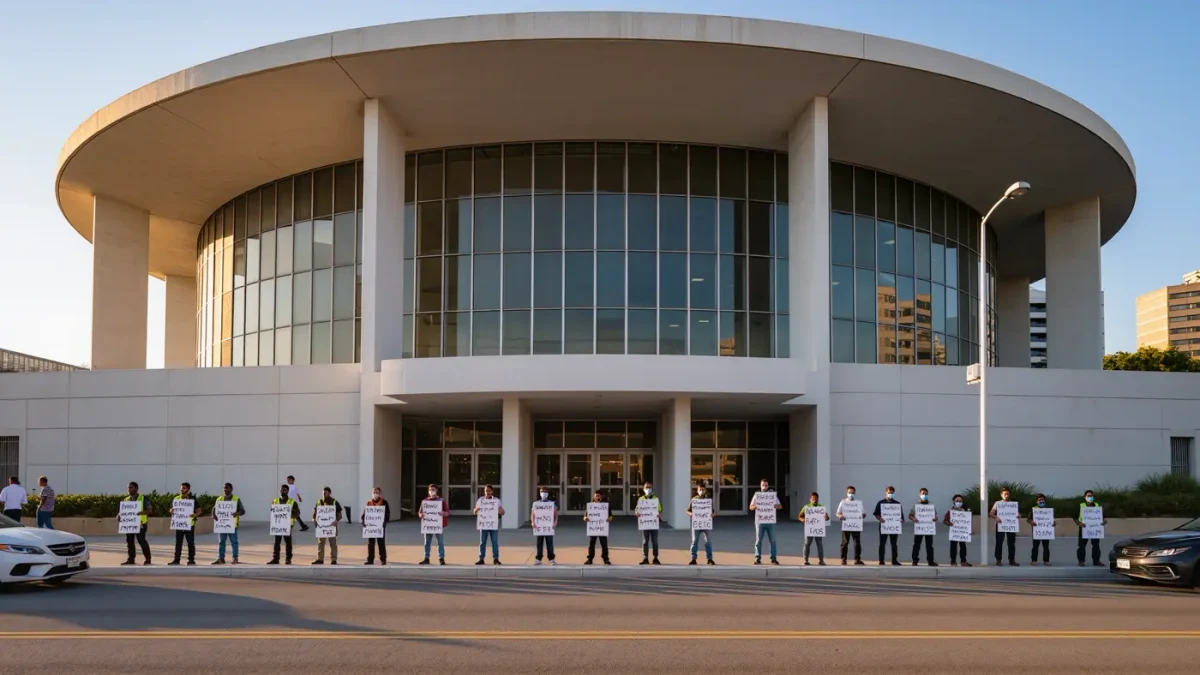
Workers at the Solomon R. Guggenheim Museum, members of UAW Local 2110, voted 93 percent in favor of authorizing a strike in February 2026 after contract negotiations stalled, according to ARTnews, Artforum and Hyperallergic. The union is seeking a three-year agreement with a 5 percent raise in year one and 4.25 percent in each of the following two years; the museum's counteroffer came in lower. A strike date had not been set, but the authorization lands at the start of the museum's peak tourist season — the only leverage timing ever allows gallery staff.
What the Guggenheim Dispute Is Really About
Negotiations for the union's second collective bargaining agreement began in December 2025, after the previous deal expired. Wages are the headline, but job security is the sharper issue: the strike vote follows abrupt layoffs at the museum the year before, and staff who survived the cuts have watched institutions refill programming budgets faster than payroll. The pattern is not unique to Fifth Avenue. Across the sector, museums restored exhibitions and expansion projects while entry- and mid-level wages stayed pinned to pre-2020 levels in real terms.
The Union Wave Keeps Adding Chapters
- The Metropolitan Museum of Art saw workers unionize in early 2026, according to On Labor's January 18, 2026 roundup — a milestone for the largest institution in the country's densest museum labor market.
- Denver Art Museum Workers United, affiliated with AFSCME Council 18, won its union election with 67 percent support, part of the national wave of art museum organizing.
- In the UK, a strike by more than 40 workers at the National Coal Mining Museum over wages was extended into 2026, according to the BBC — evidence the disputes are not an American peculiarity.
Why Collectors and Trustees Should Care
Labor risk is now programming risk. A strike at the Guggenheim during a blockbuster summer would hit attendance revenue, membership renewals and the corporate sponsorship optics that boards guard jealously. For lenders and collectors with works on the walls, a walkout complicates installation schedules, condition checks and the quiet logistics that make loan exhibitions function. Ask anyone who has tried to move a crate through a picket line.
The deeper shift is structural. When the Met unionizes, the remaining non-union holdouts in New York lose their structural excuse. Museums spent the 2010s building endowments and expansions on a labor model that the 2020s workforce has declined to accept. The Guggenheim's 93 percent is not a temperature check — it is a floor under the next dozen negotiations, and every board in America knows what a unanimous strike authorization at a marquee institution does to the settlement range three contracts down the road.
The quiet irony: museums have spent a decade arguing that their public value justifies philanthropic billions, while their staffs have concluded the same argument applies to wages. Both sides are right, which is exactly why this spring ends with settlements, not victories.