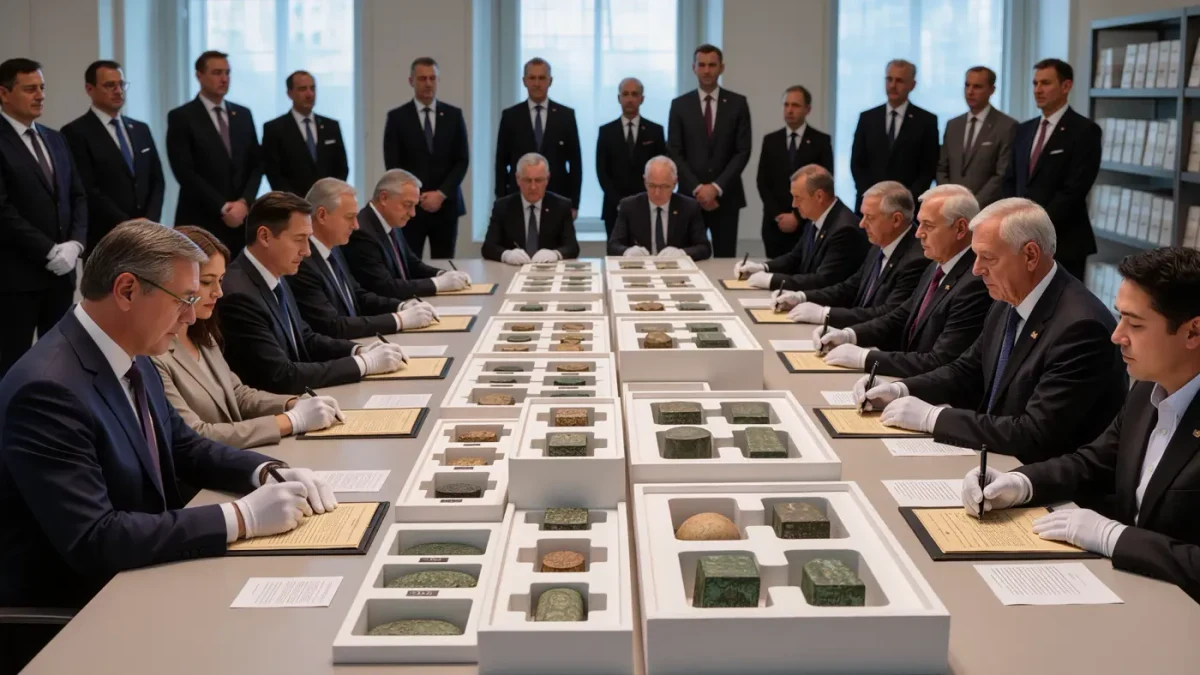
A New York State Supreme Court judge ordered the restitution of Amedeo Modigliani's Seated Man with a Cane (1918) to the heirs of Oscar Stettiner, ending an 11-year legal battle, according to legal trade reporting from April 2026. The ruling is the most consequential Nazi-era restitution decision of the year to date: a court-ordered transfer of a nine-figure-quality picture, not a negotiated settlement, and a signal that the statute-of-limitations defenses museums relied on for decades are eroding in New York courtrooms.
The Legislative Backdrop Changed First
The Modigliani ruling did not arrive in a vacuum. In March 2026, the U.S. House adopted a bill making it easier for heirs of Nazi victims to recover looted art by giving them additional time to file claims, according to The New York Times, March 16, 2026. For claimants, the procedural math matters more than the headline: cases that were time-barred become viable, and viable claims become leverage in negotiations that never reach a courtroom. Expect the number of quietly settled claims to rise faster than the number of decisions — settlements are how institutions manage both liability and reputation.
Museums Started Giving Back Without Being Sued
Separately, several U.S. museums voluntarily returned Egon Schiele works on paper to the heirs of Fritz Grünbaum, the Jewish cabaret performer murdered in the Holocaust, according to itsartlaw.org. The Grünbaum litigation has produced a split in case law over the decades, but the voluntary returns mark the shift that matters: institutions reading the legal and ethical weather and choosing conveyance over defense. For a museum board, a returned Schiele is a one-week story; a lost trial is a permanent provenance asterisk on the collection.
Why This Half-Year Rewrites the Playbook
- Courts, not commissions, are driving outcomes in the U.S. — the New York judiciary has effectively become the country's most active restitution forum, decades after the Washington Principles promised easier solutions.
- Federal legislation extends claim windows, converting dormant claims into live ones and moving leverage toward heirs.
- Voluntary returns, like the Schiele cases, set expectations that speed of resolution is itself a reputational asset.
What It Means for Collectors and Institutions
Provenance due diligence just got more expensive and more unavoidable. Works with Continental European ownership histories between 1933 and 1945 — particularly those passing through Paris or Swiss trade in the 1940s — now carry materially higher claim risk, and insurers are pricing accordingly. For buyers at auction, the practical move is harder-line provenance representation and warranty language; for museums, the Modigliani ruling suggests that holding contested work through litigation is no longer the default institutional strategy, because the downside tail just lengthened.
The comparison with a decade ago is stark: in the mid-2010s, restitution suits routinely died on limitations grounds, and museums knew it. In 2026, a claimant won a court-ordered handover of a Modigliani, Congress extended filing windows, and museums returned art voluntarily in the same six months. Three different mechanisms, one direction. The era of waiting out the heirs is over.