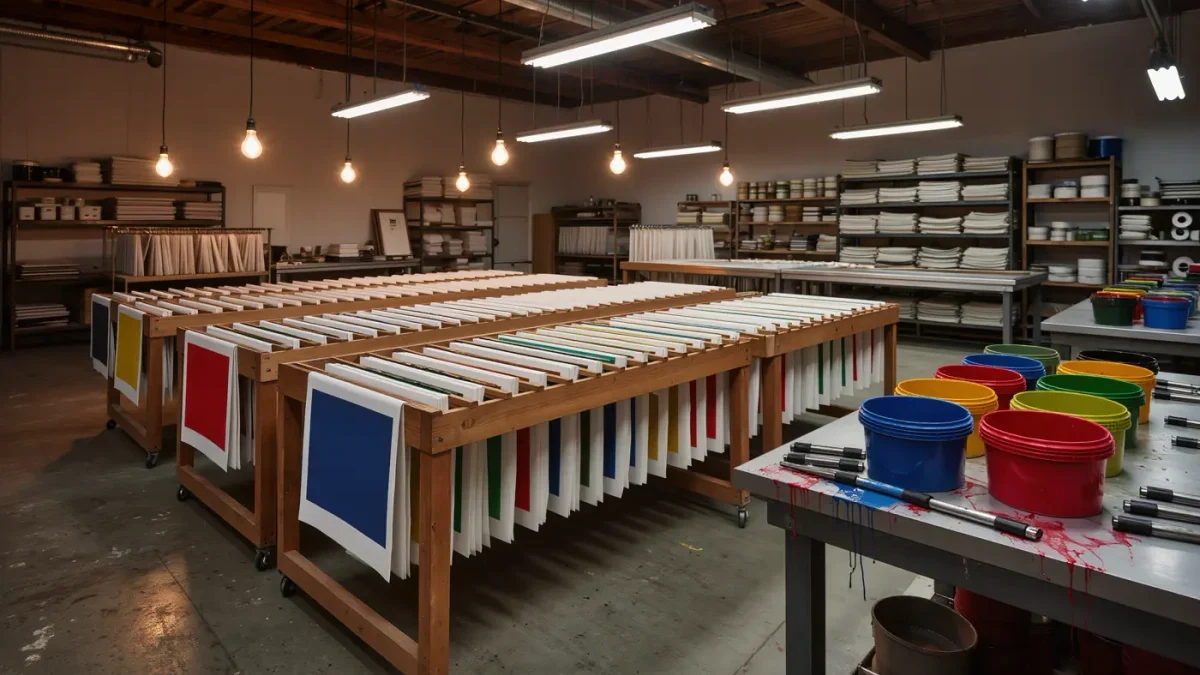
Editions — photographs, prints, casts, and multiples produced in declared limited runs — are the entry product of the contemporary market, typically priced at a fraction of a unique work, often one-tenth or less. For an emerging artist, a print edition at $800 does something a $9,000 painting cannot: it creates a collector base of a dozen people at once. For collectors, it offers a signed, legitimate piece of a career before the ladder prices them out. The mechanics are simple. The economics are not.
What Exactly Counts as an Edition?
An edition is a declared, finite run of identical objects, numbered and usually signed. The declaration is the product: 12 of 12 means exactly that, and the artist's credibility is the collateral behind it.
The vocabulary matters. A print edition of 25 plus two artist's proofs (APs) means 27 printable objects exist, no more — in principle. Photographers traditionally worked in larger runs, sometimes 50 or more, while sculpture casts have long kept to single digits under convention; bronze editions of 8 or fewer are a common gallery standard, a number partly shaped by how the market reads scarcity. Multiples are a looser category — objects produced in larger volume, sometimes unnumbered, often sold through shops and fairs at accessible prices. The certificate of authenticity is the edition's legal spine: it states the edition size, the number of the object, and usually the production method. Lose the certificate and the object loses most of its liquidity, whatever the signature says.
Why Do Editions Work So Well for Emerging Artists?
Because they solve the emerging artist's core problem: no sales history. An edition converts one work of talent into a dozen affordable entry points, each one a future collector relationship.
Galleries use editions deliberately. A young painter's first print release prices at $500–$2,000, a band that museum-curiosity buyers, young professionals, and the artist's own network can actually transact in. Every edition buyer is a data point — a name for the gallery's list, a potential buyer of the unique work in three years. Editions also travel: benefit editions for museums and nonprofits put an artist's name in front of exactly the audience that matters, which is why benefit print programs are a recognized rung on the career ladder. And editions democratize the wait-list problem. A unique painting has one buyer; an edition of 25 has 25, and 25 people now check the artist's prices.
- Sales velocity: editions sell faster and more predictably than unique work.
- Collector pipeline: every edition buyer is a candidate for paintings later.
- Cash flow: production is amortized across the run, softening per-unit cost.
- Visibility: editions circulate — in homes, in benefit sales, at fairs' affordable sections.
How Do Edition Prices Compare to Unique Works?
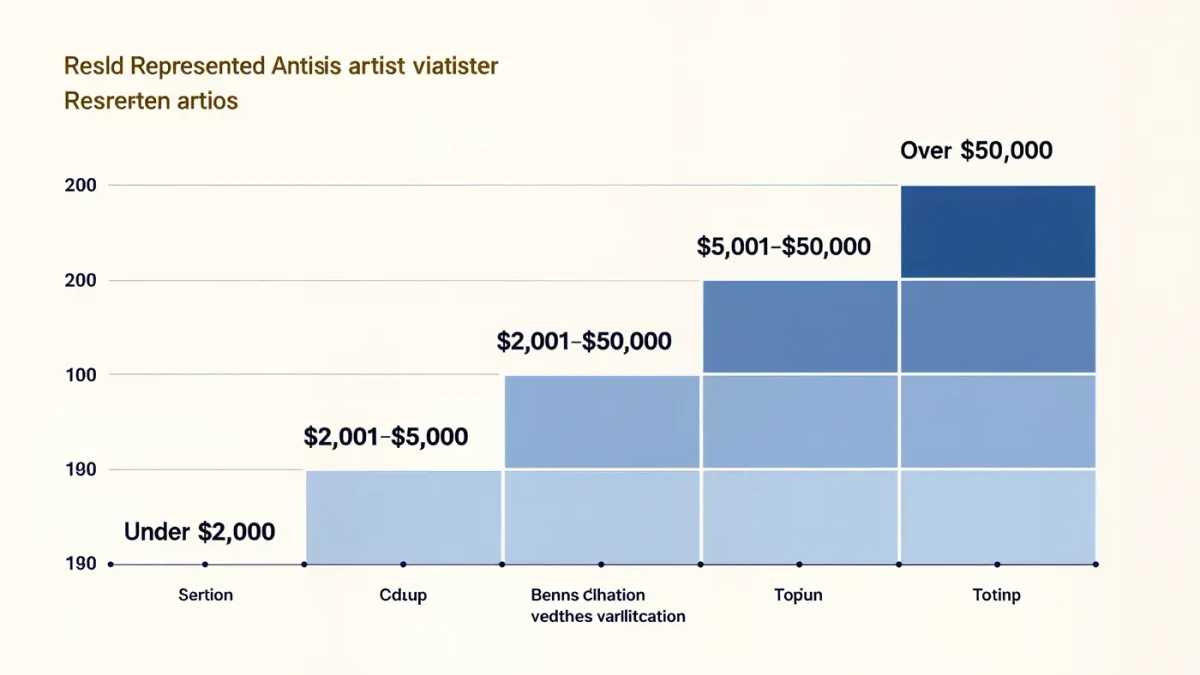
The rule of thumb dealers use: an edition object should sit at roughly 10–20% of the unique work's price, adjusted for edition size. Smaller run, higher fraction.
An artist whose paintings sell at $10,000 might price a photograph edition of 12 at $1,500–$2,500, rising as the run sells — many programs step prices up as availability shrinks, so number 1 of 12 is cheaper than number 11. Sculpture casts invert the logic: a cast edition of 6 from an artist with a $30,000 unique-sculpture market can price near $12,000, because the market reads a small cast edition as nearly unique. The relationship is not formulaic; it is set by what the market has already accepted for comparable artists' comparable runs. What editions almost never do is approach unique-work pricing — beyond a certain fraction, the buyer rationally steps up to the painting, and the edition stalls.
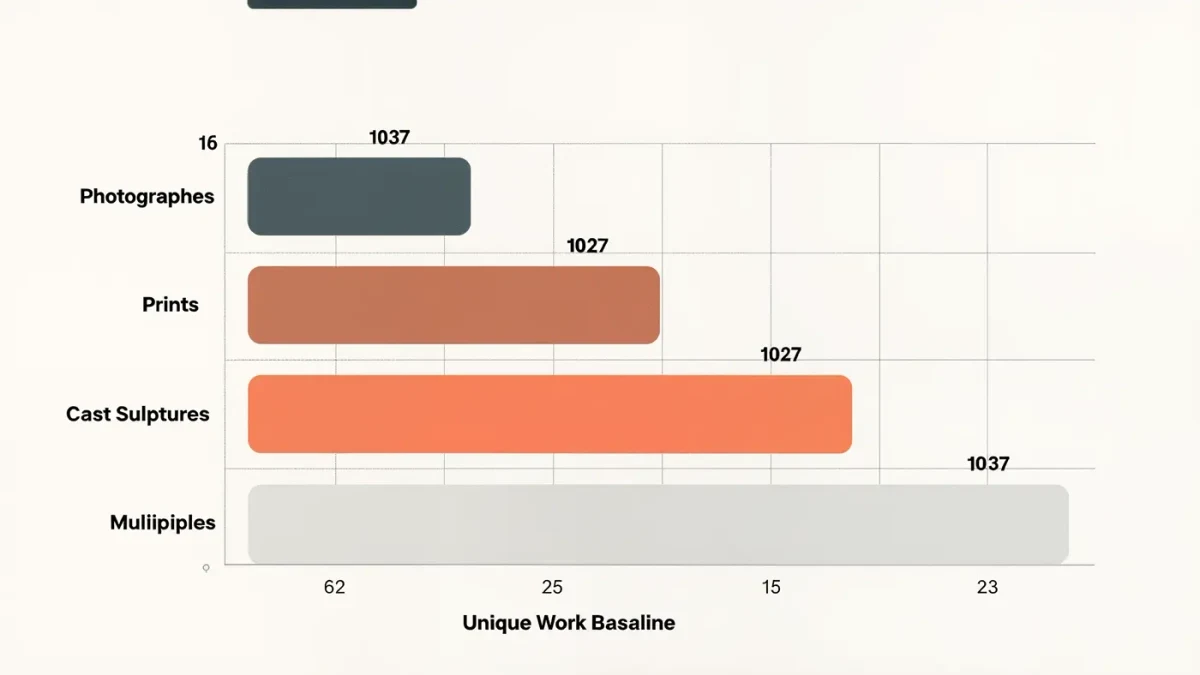
| Format | Typical edition size | Price vs. unique work |
|---|---|---|
| Photograph | 5–25 plus APs | ~5–15% |
| Print / silkscreen / etching | 20–75 | ~3–10% |
| Cast sculpture | 3–8 plus APs | ~30–60% |
| Multiple / object | 50–500 | ~1–5% |
What Should Collectors Watch Out For?
Three things: edition integrity, posthumous editions, and the difference between scarcity and value. The first is mechanical — a declared edition of 20 should never reappear as a different paper size, a different frame, a "digital reissue." Splitting one image into multiple sizes under separate edition counts is a recognized abuse, and sophisticated buyers ask directly.
Posthumous editions — printed or cast after the artist's death by an estate or foundation — are legitimate in some practices, especially photography, but they price differently and the market knows it. An estate-printed photograph carries none of the artist's hand; its value is the image plus the estate's authority. The deeper issue is that small edition size alone creates no value. Thousands of micro-editions by unknown artists sell for three figures and stay there, because the edition multiplies an existing demand; it does not create one. The edition is an amplifier, not an engine. Collectors who understand this buy editions by artists whose unique-work market is already moving — the edition then behaves like a liquid, affordable derivative of that market, which is exactly how the sharpest entry-level buying works.
How Do Editions Interact With the Rest of the Market?
Editions are also a hedge, for both sides. For artists, edition income smooths the gap between solo shows; for galleries, editions fill stands at fairs' accessible end and give advisors something to place with tentative clients. In downturns, affordable segments historically hold up better than the middle market, because the under-$5,000 buyer is spending discretionary money rather than allocating assets.
The auction relationship is real but bounded. Iconic photographs and print series by established names trade robustly at auction — editions are the most liquid slice of the contemporary market — but young artists' editions rarely carry secondary volume, and galleries quietly prefer it that way. A hot edition flipping at auction forces the same pricing conversations as a flipped painting, with thinner margins. The best-behaved editions sell out slowly to people who intend to keep them. That, in the end, is the quiet promise of the format: not a shortcut to a market, but a patient way of assembling the dozen strangers who will fund the first decade of a career.
FAQ
Do smaller edition sizes mean higher prices?
Generally yes. Scarcity is priced, which is why a cast edition of 6 sits far closer to the unique-work price than a print run of 50. But edition size is only one variable — the artist's demand does the heavy lifting, and tiny editions by unknown artists stay cheap.
What is an artist's proof?
APs are a small number of copies outside the main edition — commonly two or three — historically pulled to check quality. They sell at parity with the numbered edition. What matters is the total count: an edition of 20 plus 8 APs is effectively an edition of 28, and buyers should ask.
Are editions a good investment?
As a class, no — most editions by emerging artists never appreciate. The strong cases are editions by artists whose unique-work market later accelerates. Buy the artist, not the scarcity, and treat the accessible price as the point rather than a flaw.
Can an artist reprint a sold-out edition?
No, not honestly. Selling out an edition and then reissuing the image in a new size or format is one of the fastest ways to destroy trust with collectors. Legitimate variations exist — a different medium, clearly declared as a new work — but the declared run is treated as final.
Why do galleries raise edition prices as the run sells?
Stepped pricing rewards early risk and captures late scarcity: number 2 of 12 is cheaper than number 11. It also builds urgency at release. Collectors who know an artist's editions step up learn to buy early, which is precisely the behavior the program wants.