A catalogue raisonné — the comprehensive, scholarly registry of an artist's complete accepted works — is the closest thing the art market has to a supreme court, and its verdicts are worth millions. Inclusion can authenticate a painting into eight figures; exclusion can render the same canvas nearly unsellable, whatever its owner believes. The compilations take decades to produce, are run by scholars, estates, and artist foundations, and sit above auction houses, dealers, and even courts in the market's practical hierarchy of truth. That power, and its limits, is one of the art world's quietest and most consequential structures.
What Is a Catalogue Raisonné, Exactly?
It is an annotated, chronological registry of every work a compiler accepts as authentic — paintings, sculptures, works on paper — with dimensions, provenance, exhibition history, and literature for each entry. The genre is centuries old and strictly academic in format.
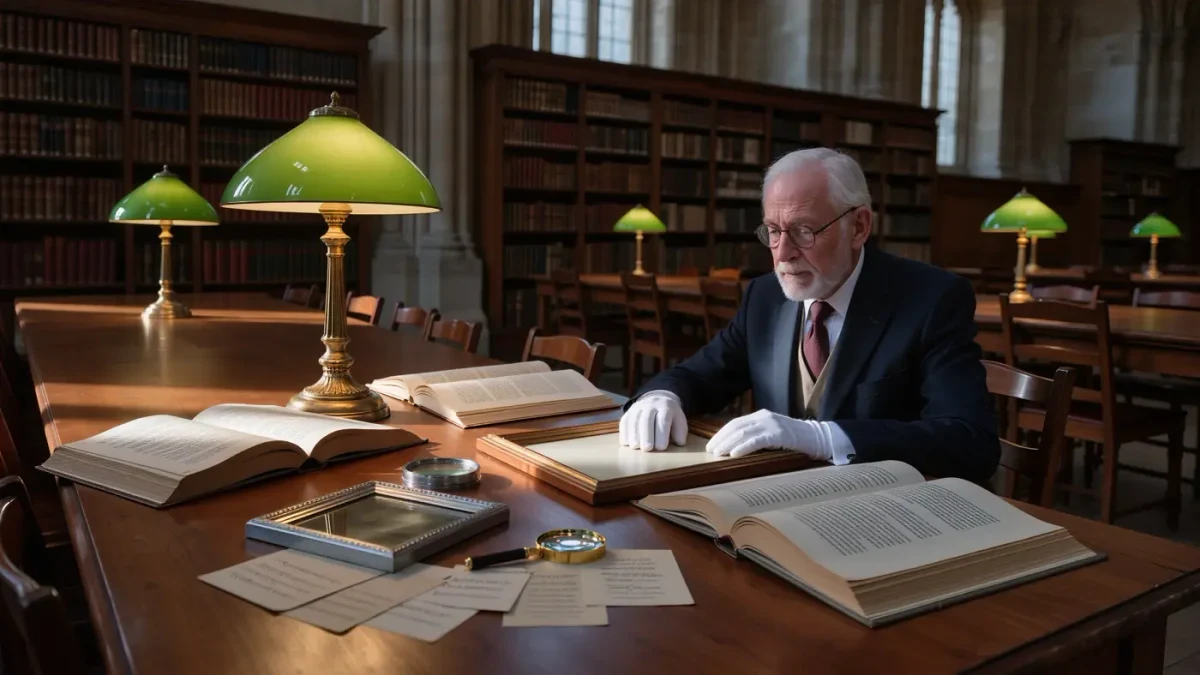
Each catalogue typically organizes the oeuvre by medium and date, reproduces the works, and documents every known ownership chain and exhibition. The labor is immense: major catalogues take ten to thirty years, tracking down works in private collections, reconciling contradictory records, examining surfaces and archives. Who makes them varies: independent scholars who dedicate careers to a single artist; museums; and, increasingly, the artist's own foundation. The legal weight is formally zero — a catalogue raisonné is scholarship, not statute — but the market treats it as binding. Auction houses will not generally offer a work excluded from the definitive catalogue, insurers balk, and buyers walk away. Scholarship, in this one corner of the economy, functions as law.
Who Gets to Decide?
Authority flows from proximity to the artist. The hierarchy runs from the living artist themselves, through estates and foundations led by relatives or court-appointed experts, to independent scholars whose authority is purely reputational.
For living artists, the question is easy: the artist's own confirmation is decisive, and galleries and foundations maintain working registries. After death, authority consolidates. The estate or foundation — often controlled by a widow, children, or a board seeded by the artist's will — typically commissions or becomes the authorizer of the catalogue, sometimes hiring a dedicated scholar as compiler. The famous difficulty is expertise liability: after a series of lawsuits in the 1990s and 2000s in which authenticity boards and foundations were sued by owners of rejected works, several prominent artist foundations — most publicly the Warhol Foundation — stopped authenticating altogether, dissolving their boards rather than defending lawsuits. The void left by retreating foundations is precisely where the catalogue raisonné gained market power: a scholar's printed entry, issued years earlier, cannot be deposed.
Why Is Inclusion Worth Millions?
Because the market pays for certainty, and the catalogue is the only certainty on offer. The price spread between an included and excluded work of the same apparent quality is not marginal — it is categorical.
The mechanism is brutal and simple. A work accepted into the definitive catalogue is sellable everywhere: auctions will catalogue it with the volume reference, museums will accept it as gifts, lenders will hang it. A work excluded, or merely omitted, becomes nearly toxic — auction houses decline it or catalogue it with qualifiers, dealers discount it heavily or refuse it, and its owner holds a disputed asset that may still carry a disputed work's storage and insurance costs. The result is that a compilation decision can swing an object's value by millions of dollars, made by a small committee or a single scholar, often with limited recourse. Owners sometimes fund research programs, lend works for study, and wait years for supplementary volumes — a polite economy of persuasion around an arbitrary-seeming throne.
What Are the Famous Controversies?
The disputes are the genre's folklore. The modigliani corpus has been contested for generations — multiple rival catalogues have circulated, and disagreements over which canvases are genuine have fueled litigation and criminal proceedings around forgeries. The Warhol Foundation's dissolution of its authentication board in 2011-2012, after litigation including a rejected-works lawsuit, stands as the cautionary tale that reshaped American authentication practice. Basquiat's market, among the most expensive of any American artist, depends heavily on the committee and catalogue infrastructure around his short, fast, documentation-poor career — and periodically digestes new forgery scandals. Old Master drawings and paintings remain the classic battlefield, where connoisseurship — the expert eye — collides with technical analysis and provenance research. The common thread: enormous money, small circles of authority, and science advancing faster than consensus.
Can Technical Analysis Overturn a Catalogue?
Increasingly, it pressures one. Dendrochronology, pigment analysis, infrared reflectography, and X-radiography now date materials and reveal underdrawings with precision that scholarship alone never had, and several long-accepted attributions have fallen to laboratory evidence. But the market's formal mechanism remains human: a catalogue entry, a committee decision, a foundation letter. The likely future — digital, continuously updated catalogues raisonnés hosted by foundations, with works submitted, examined, and statused online — is already emerging, and it will change the pace of the court without changing its jurisdiction. The catalogue raisonné endures because the market needs exactly one thing it provides: a final answer someone else will stand behind.
FAQ
What is a catalogue raisonné in simple terms?
The complete scholarly registry of an artist's accepted works, with images, dimensions, provenance, and exhibition history for each. It takes decades to compile and functions as the market's definitive authenticity reference — despite having no formal legal authority.
Who decides what gets included?
For living artists, the artist. After death, the estate or foundation — often through a dedicated scholarly compiler — holds authority, supplemented by independent scholars whose standing is reputational. Auction houses and dealers defer to the definitive volume in practice.
Why did the Warhol Foundation stop authenticating?
It dissolved its authentication board in the early 2010s after litigation from owners of rejected works, which made the liability of rendering negative verdicts unsustainable. Several foundations made similar retrenchments, shifting authenticity weight onto catalogues and scholarship.
Can a work excluded from a catalogue still be sold?
Technically yes, practically with difficulty. Excluded or omitted works are typically declined by major auction houses, heavily discounted by dealers, and avoided by institutional buyers — which is why an exclusion can destroy most of a work's market value.
Are catalogues raisonnés ever wrong?
Yes, and they are revised. Later volumes, supplemental scholarship, and technical analysis have overturned accepted attributions in famous cases. The market treats the current edition as final because it needs a final answer, not because the scholarship is infallible.