How is a work of art authenticated? Through a largely unofficial system of authority. There is no government registry of genuine paintings, no licensing board for authenticators; there are artist foundations and estates that control catalogs raisonnés, a shrinking population of independent scholars who opine on attribution, and courts that become the venue of last resort when the two decline to speak. The system's defining trait is asymmetry: confirming a work adds modest value to the seller, while wrongly confirming it exposes the authenticator to litigation — so the rational professionals have grown cautious, and the market has learned to read silence.
Who Holds the Authority
For dead artists, the operative authority is usually the catalogue raisonné — the comprehensive, scholarly compilation of an artist's complete works. Whoever controls it controls the market's definition of authentic: works included are sellable at full value; works excluded are, functionally, worth a fraction regardless of the owner's beliefs. Control typically sits with a foundation or estate established by the artist or heirs, or with an independent scholar who has devoted decades to the corpus. For living artists, authentication is simpler in principle — the artist is the authority — but complicated in practice by memory, estrangement from early work, and studios that decline to engage.
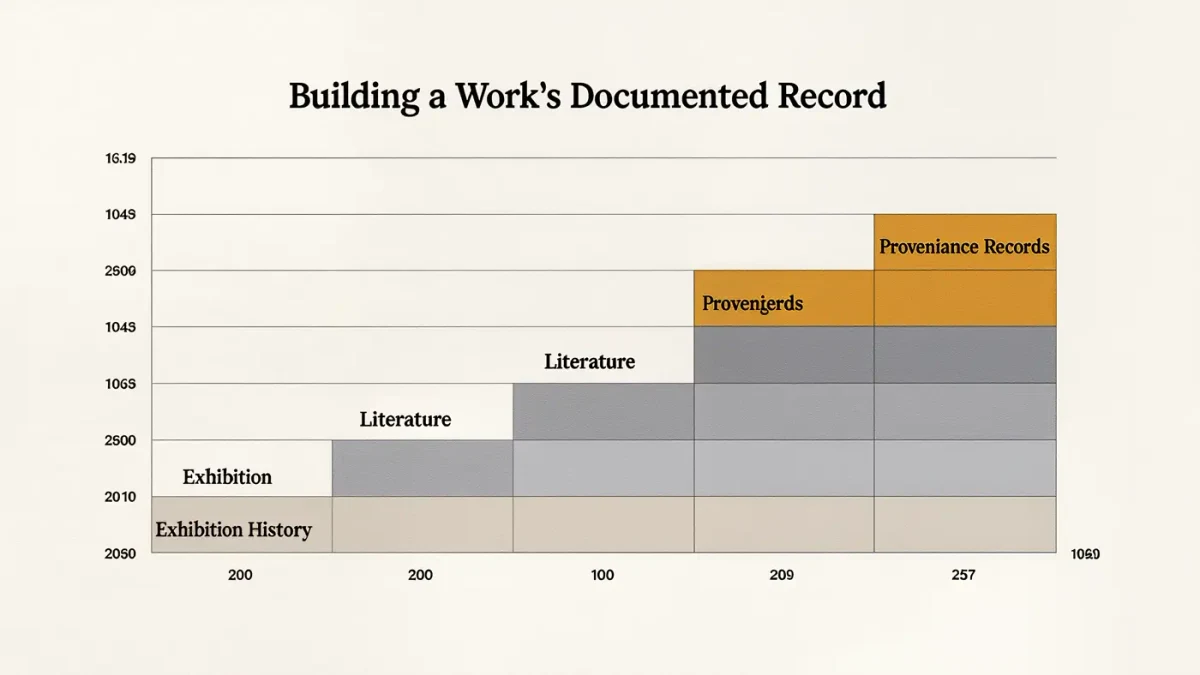
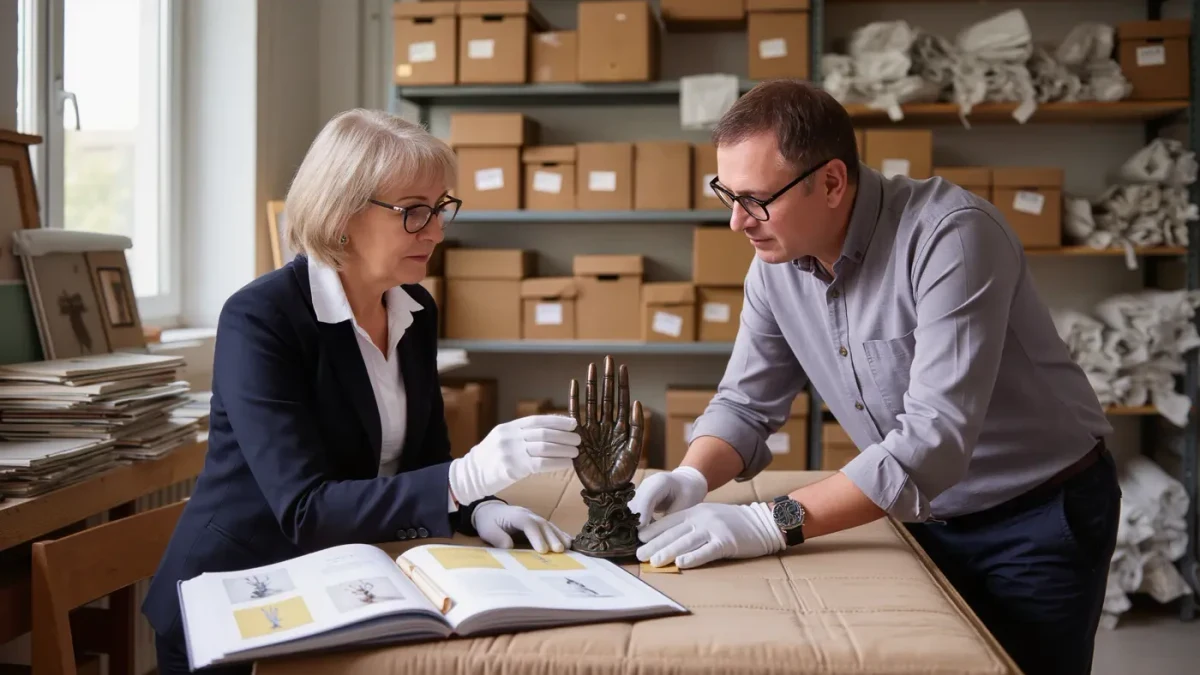
Layers of documentary evidence surround this central authority. Provenance — the chain of ownership back toward the artist's studio — is the historical spine; exhibition and literature records corroborate; technical analysis (materials dating, pigment analysis, canvas weave studies, imaging of underlayers) can rule works in or out on physical grounds. No single element is conclusive; the professionals weigh them together, which is why the same work can be judged differently by different committees.
The Process, Step by Step
- Assemble the dossier. Provenance documentation, past ownership, exhibition history, publication history, prior certificates, purchase records.
- Submit to the relevant authority — the foundation, the catalogue raisonné committee or the recognized scholar — usually for a fee and a research deposit, and often a long wait.
- Physical examination by the authority, frequently with technical analysis commissioned from conservation scientists.
- Determination: accepted, rejected, or declined — the third outcome being a committee's refusal to opine, which the market treats as a soft negative.
- Inclusion or exclusion from the catalogue raisonné, the definitive market act when one exists.
Why the System Is More Cautious Than It Was
The defining structural fact of modern authentication is litigation exposure. When a committee rejects a work, the owner of a painting suddenly worth a fraction of its prior value has an obvious incentive to sue — and American courts have been a hospitable venue. The consequence, widely documented across the market, is institutional withdrawal: several prominent artist foundations stopped issuing authentication opinions altogether after becoming targets of suits, and independent experts increasingly opine only privately, or through counsel, or not at all. The market adapted rather than collapsed — weight shifted toward provenance research and technical analysis, and toward transaction structures (invoices with representations and warranties) that allocate authenticity risk between buyer and seller instead of pretending a certificate eliminates it.
This is also why the certificate itself has been demoted. A paper certificate is only as good as the standing of its issuer at the moment of resale; the durable instruments are inclusion in the scholarly record, an unbroken provenance and a clean bill from technical examination. Sophisticated buyers treat certificates as one input among several rather than as termini.
When Courts Get Involved
Litigation enters at the point where the informal system fails: a buyer alleges a fake, a seller alleges a foundation destroyed value by rejecting a work, insurers dispute coverage. Courts are poor venues for attribution — judges and juries are asked to weigh connoisseurship, forensic reports and provenance documents, producing outcomes that satisfy neither scholarship nor the market — but they are competent on contract. The practical lesson the trade absorbed: fight about authenticity through representations, warranties and return provisions rather than through the question of what is genuine. A well-drafted invoice now does work that a certificate did forty years ago.
| Evidence type | What it establishes | Weight |
|---|---|---|
| Catalogue raisonné inclusion | Scholarly canon accepts the work | Decisive for that artist's market |
| Provenance chain | Continuous ownership history | Strong when unbroken and documented |
| Exhibition and literature records | Public history of the object | Corroborative |
| Technical analysis | Physical consistency with period and studio | Can exclude definitively; rarely proves alone |
| Certificates | A stated opinion at a point in time | Only as good as issuer's current standing |
What a Buyer Should Actually Do
Insist on documentation before purchase: full provenance as known, literature references, condition report, and a written invoice whose authenticity terms survive the seller's enthusiasm. Verify the authority situation for the artist specifically — who, if anyone, opines; whether the catalogue raisonné is complete, in progress or contested. And price the ambiguity: works with unresolved attribution questions trade at discounts that reflect exactly the probability the market assigns to rejection, which can be an opportunity or a tuition payment.
Signatures, Stamps and the Studio's Paper Trail
Alongside the scholarly apparatus sits a humbler category of evidence: the marks artists and their circles leave on works themselves. Signatures, dates and dedications; studio stamps and inventory numbers; labels from framer, dealer or exhibition on the stretcher or frame back; import and export stickers accumulating like passport pages. Individually none is decisive — signatures are forged more readily than paintings — but in aggregate the object's own paper trail either corroborates the dossier or quietly contradicts it, which is why experienced examiners read the back of a canvas before the front. The market's technicians (registrars, conservators, cataloguers) treat these marks as data, mapping an artist's studio numbering habits and label history the way philatelists study printings. For the collector, the lesson is custodial: never clean a backing away for tidiness, photograph everything before reframing, and treat the object's accumulated physical documentation as the primary source it is. A stretcher stripped of its history is a biography with the first chapter removed, and the market prices damaged books accordingly.
FAQ
Is there an official body that authenticates art?
No. Authentication authority is informal — artist foundations and estates, catalogue raisonné committees and recognized independent scholars. Their determinations are commercially decisive precisely because the market, not the state, treats them as authoritative.
Why have some artist foundations stopped authenticating work?
Litigation exposure. Rejecting a work can destroy most of its value, giving owners strong incentives to sue, and several prominent foundations ceased issuing opinions after becoming litigation targets. The expertise migrated to private consultation and technical analysis.
What is a catalogue raisonné and why does it matter?
It is the comprehensive scholarly compilation of an artist's complete works. Inclusion generally makes a work fully sellable at market prices; exclusion can reduce value by an order of magnitude, which is why control of the catalogue is control of the artist's market.
Can scientific testing prove a painting is genuine?
It can frequently disprove one — anachronistic pigments or materials rule works out decisively. Positive findings establish only physical consistency with the period and studio; attribution still requires connoisseurship and documentary evidence.
What protects a buyer against buying a fake?
Mainly contract and diligence: full documented provenance, literature and condition records, and an invoice with authenticity representations and warranties. Return provisions now do much of the protective work once assigned to certificates.