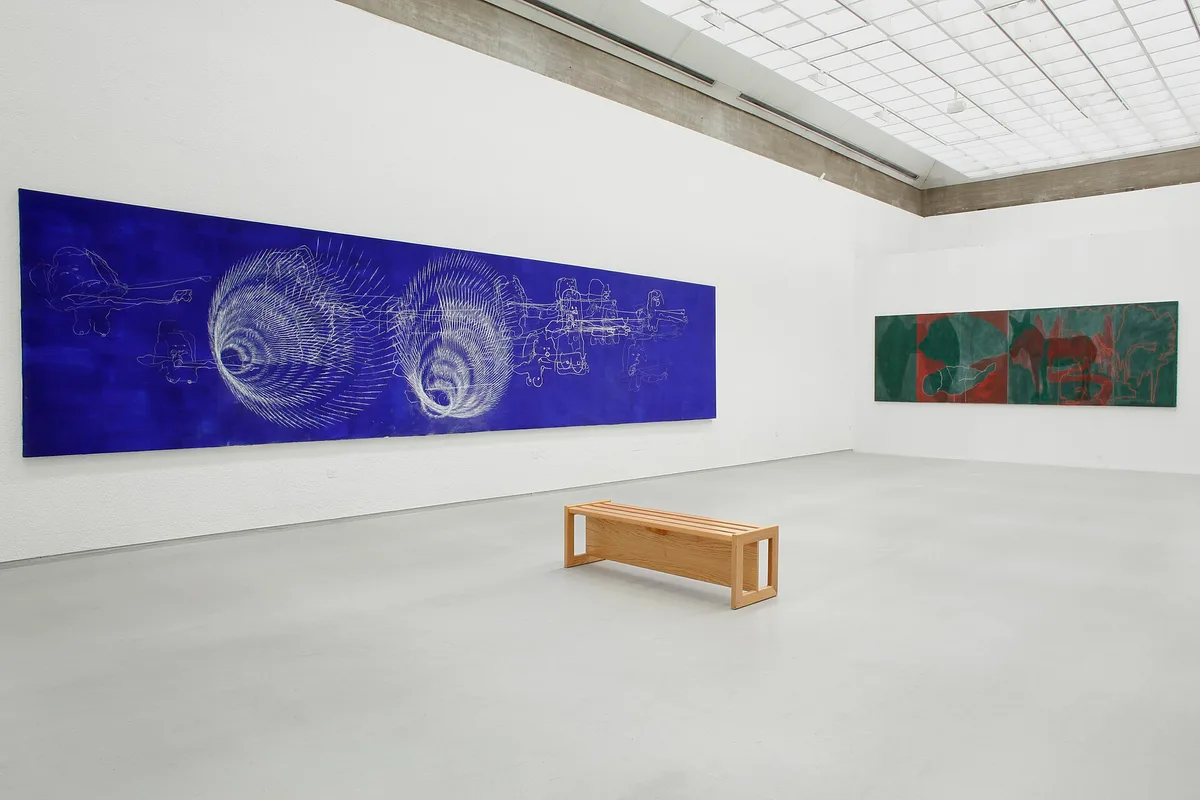
A retrospective is an art exhibition that presents works from an extended period of an artist's activity, according to Wikipedia's overview of the term, and that span is exactly what makes it the hardest show to pull off. A single strong painting can carry a group show. A survey cannot hide. Every weak decade, every dead end, every overproduced late period is on the wall, in order, with a catalogue to preserve the evidence.
That is also why the format matters more than any other. A retrospective is not just an exhibition; it is an argument about what an artist's career added up to, made by a curator with loans the artist's market cannot easily replace. When the argument holds, the show can re-rank an artist for a generation. When it does not, the filler walls do the re-ranking anyway, just less flatteringly. Readers who want the mechanics of how these shows get built and what they do to prices will find the logistics in our guide to museum surveys and retrospectives; this piece is about the verdict itself, and how to reach one fairly. We covered a connected angle in Museum Surveys and Retrospectives: How the Big Shows Are Built and What They Do to an Artist's Market.
What is a retrospective, exactly, and why is it different from a survey?
The terms overlap, and museums use them loosely, but the distinction is worth keeping. A retrospective looks back across a whole career, usually a substantial one, and usually late in it or after its end. A survey may cover a shorter stretch, a single theme, or a mid-career checkpoint. The word itself is old and plain: from the Latin retrospectare, to look back. As the Wikipedia entry notes, the term has spread far beyond art, into film programming, compilation albums, even software development, where a retrospective is a meeting held to discuss what worked and what did not.
That software usage is more apt than it sounds. Both formats share the same risk: a retrospective is a reconstruction after the fact, and reconstruction flatters. The show's sequence implies a trajectory. Hang the right sixty works in the right rooms and a patchy career reads as a steady ascent. The viewer supplies the narrative the hang suggests. A good critic notices the suggestion and asks who benefits from it.
What separates a revelatory retrospective from a filler wall?
Look first at what the show refuses to include. The strongest retrospectives are defined by their omissions: the early commercial work left in the storeroom, the derivative decade represented by two pieces instead of twelve, the late slack handled with one honest room rather than a corridor of politeness. A curator with real conviction can say no to an artist, or to an artist's foundation, or to a lender who wants four mediocre canvases hung together. A curator without that conviction gives you the filler wall: a room that exists because the chronology demanded a room, hung with whatever was available.
Second, look at the hangs themselves. Revelatory shows make unexpected arguments with familiar works. They pair an early drawing with a late painting and let you see the fifty years in between collapse. They give a supposedly minor period enough wall to make its case, then let it fail on its own terms. Filler walls do the opposite. They space works evenly, label them chronologically, and trust the timeline to do the thinking. Chronology is a fact, not an argument. A show that has nothing to say beyond the dates is a filing system with ticketing.
Third, look at the loans. A revelatory retrospective assembles works that do not travel, pulled from private collections and distant institutions, because the curator spent years asking. A filler wall is what you get when the loan requests came back thin and the show went up anyway. The trade notices this. So should you.
How should a critic judge a retrospective fairly?
The fair standard is the show against its own ambition, not against some ideal survey that exists nowhere. A modest show of a modest figure can be a complete success if it does what it set out to do: establish the work in public memory, make the case for its seriousness, and get out of the way. A lavish show of a major figure can be a failure if it mistakes inventory for insight. Our guide to the criteria critics actually use to judge an exhibition covers the general machinery; a retrospective adds two questions to the checklist.
First: does the show change your view of any period of the artist's work, or merely confirm the received one? Confirmation is not nothing. A retrospective that consolidates a reputation with impeccable hangs has done real work. But revelation is the format's whole reason for existing at this cost and scale. Second: does the show survive its own catalogue? The catalogue is where the argument gets fixed in print, and the catalogue essay is often the most durable statement of the curator's case. Documentation matters here in a way it does not in a group show; as our piece on why exhibition catalogues matter explains, the record a survey produces can go on to shape an artwork's market history for decades. A show whose argument dissolves between the wall text and the book was never really an argument. For related coverage, see Why Exhibition Catalogues Matter: How Documentation Builds — and Sometimes Becomes — an Artwork's Market History.
What does the retrospective verdict mean for collectors and the market?
The market reads these shows the way a due-diligence team reads a filing. A well-received retrospective functions as institutional validation at scale: the museum has effectively published a curated, loan-backed opinion of which periods matter. Prices in the endorsed periods tend to firm up. Periods the show skipped, or hung apologetically, tend to drift. None of this is a guarantee, and none of it is instant; but the direction of the signal is legible, and sophisticated consignors time their offerings to it.
Collectors should read the verdict with one caution. A retrospective is a curatorial judgment, not a market audit. The museum's case is about significance; the auction room's is about what buyers will pay tonight, and the two only sometimes agree. The honest position is that the show moves the argument and the market follows, or does not, on its own schedule.
Our analysis: the format's real test is honesty about decline
What this means, in the end, is that the retrospective is the one exhibition format that cannot be saved by a single hit. A biennale can survive on two great pavilions. A commercial show can survive on one trophy consignment. A career survey is judged as a whole, because wholeness is its subject. The shows that hold up, years later, are the ones brave enough to hang the weak work and let the strong work carry it, rather than papering over the gaps. The shows that do not hold up are the ones that treated a career as an inventory to be cleared. The wall never lies for long. It just waits for the catalogue to catch up.