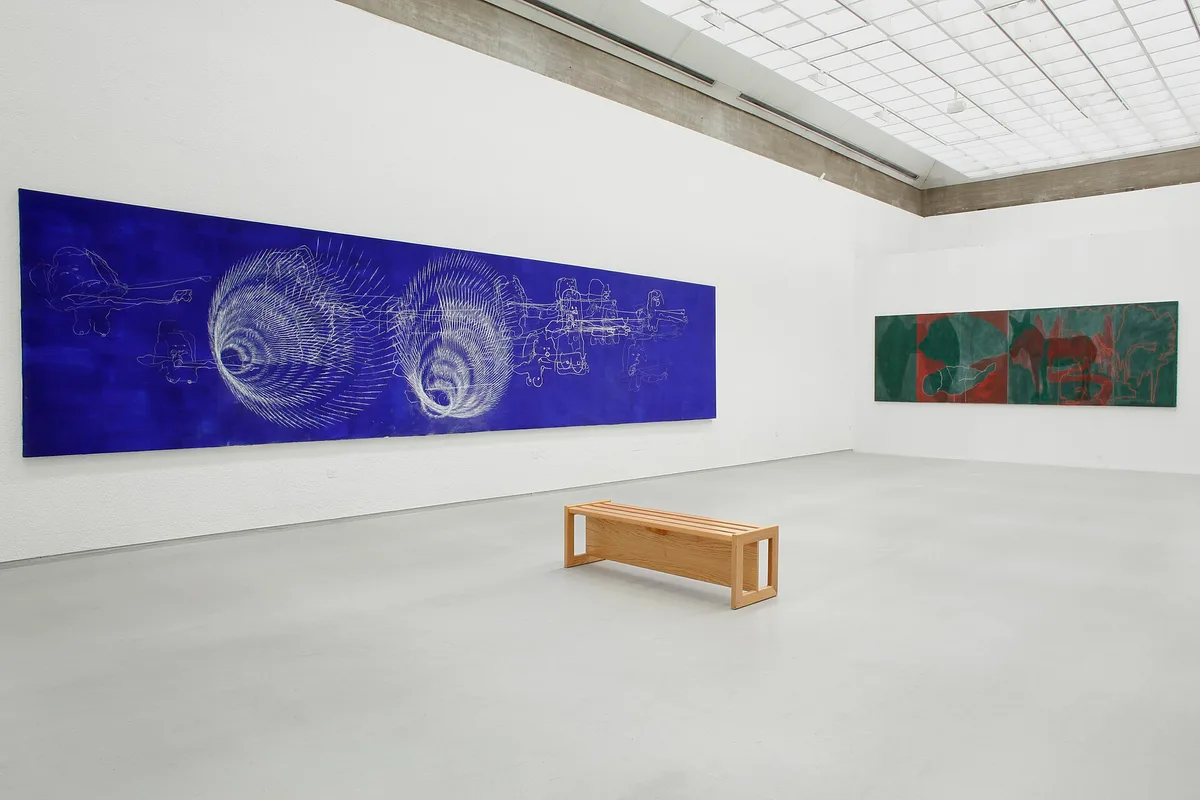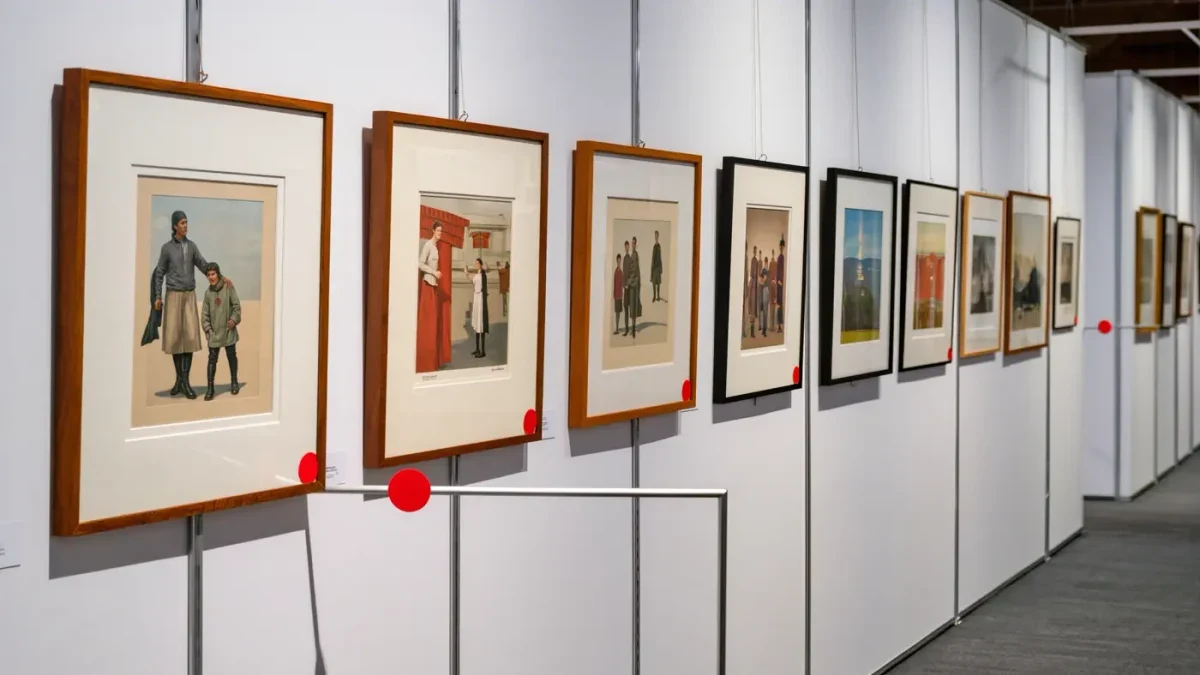
What does a museum survey do? It converts a career into an argument. The survey — a museum-organized exhibition spanning a substantial arc of a living artist's work — and the retrospective, which claims to cover the whole arc and traditionally honors or commemorates it, are the largest single interventions an institution can make in an artist's standing. They are also, unsentimentally, the strongest validated inputs into market pricing that exist outside the auction record: an artist's price level before and after a major museum show is one of the most reliable step-functions in the entire art economy.
Survey vs. Retrospective vs. Mid-Career Show
The taxonomy matters because each format makes a different claim. A retrospective asserts completeness — the whole career, usually at a museum with the resources to borrow across decades, and historically often for artists at the end of a career or after it. A survey asserts significance: a substantial, thesis-driven selection that says this artist's development merits institutional narration now, typically mid-career. A mid-career show is the survey's slightly smaller sibling. Below these sit the focused exhibitions — single bodies of work, single periods — which validate specifically rather than comprehensively.
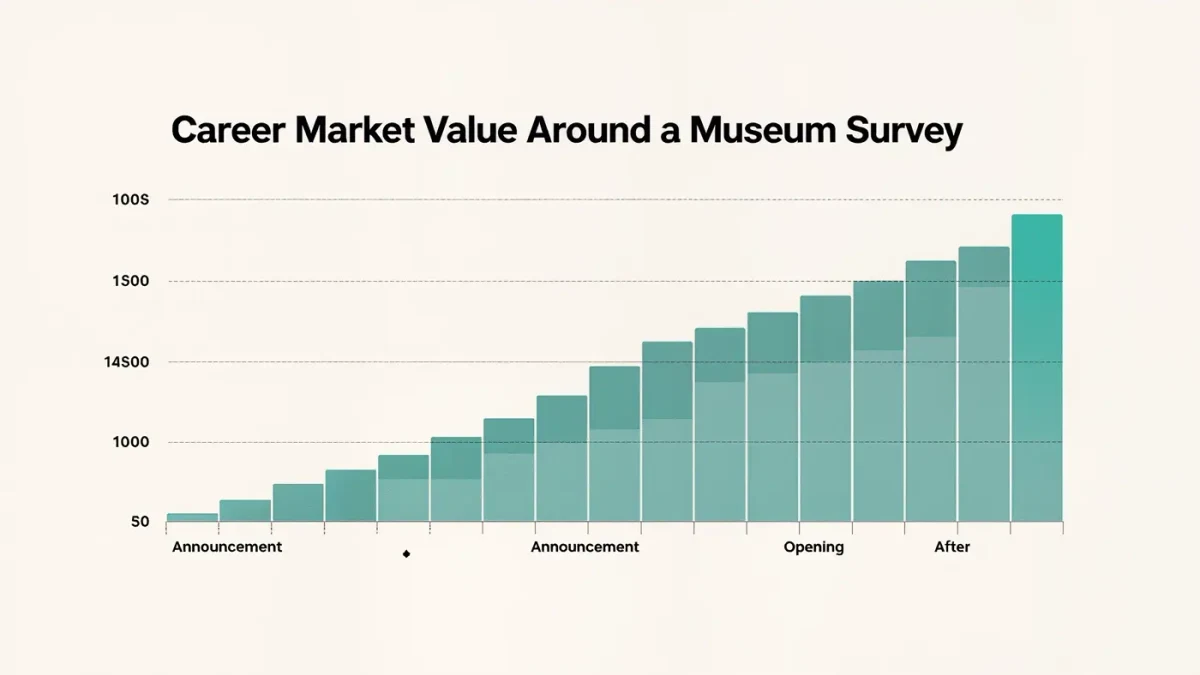
The institution's tier matters as much as the format. A survey at a major museum in New York, London, Paris or Los Angeles carries different weight than the same checklist at a regional kunsthalle, and a traveling show — organized by one museum and moving to two or three others — compounds the effect, since each venue generates its own press, catalogue and audience. Dealers price this calculus explicitly: the period between announcement and opening of a major survey is the classic window in which primary prices are raised to meet the validation that is arriving.
How the Big Shows Are Actually Built
A major survey begins years out, typically three to five, with the museum's curatorium proposing the artist to the acquisitions or exhibition committee. The mechanics that follow shape everything the visitor eventually sees.
- Curatorial thesis and checklist. The curator develops the argument and negotiates loans — from museums (diplomatic, slow), from collectors (reciprocal, delicate) and from the artist's galleries (motivated, generous). The checklist is the show's real architecture.
- The catalogue. Commissions of new essays, archival research, a revised chronology. For the artist's record this scholarship outlives the exhibition and becomes standard citation.
- Funding. Museum exhibition budgets are substantially funded by grants and patrons; lead supporters of a survey are frequently collectors of the artist, an alignment of enthusiasm and portfolio the market does not fail to notice.
- Installation and interpretation. Gallery sequencing, conservation of loans, publication of the scholarly apparatus — and the opening, timed for press and trustees before the public.
What the Market Is Actually Reading
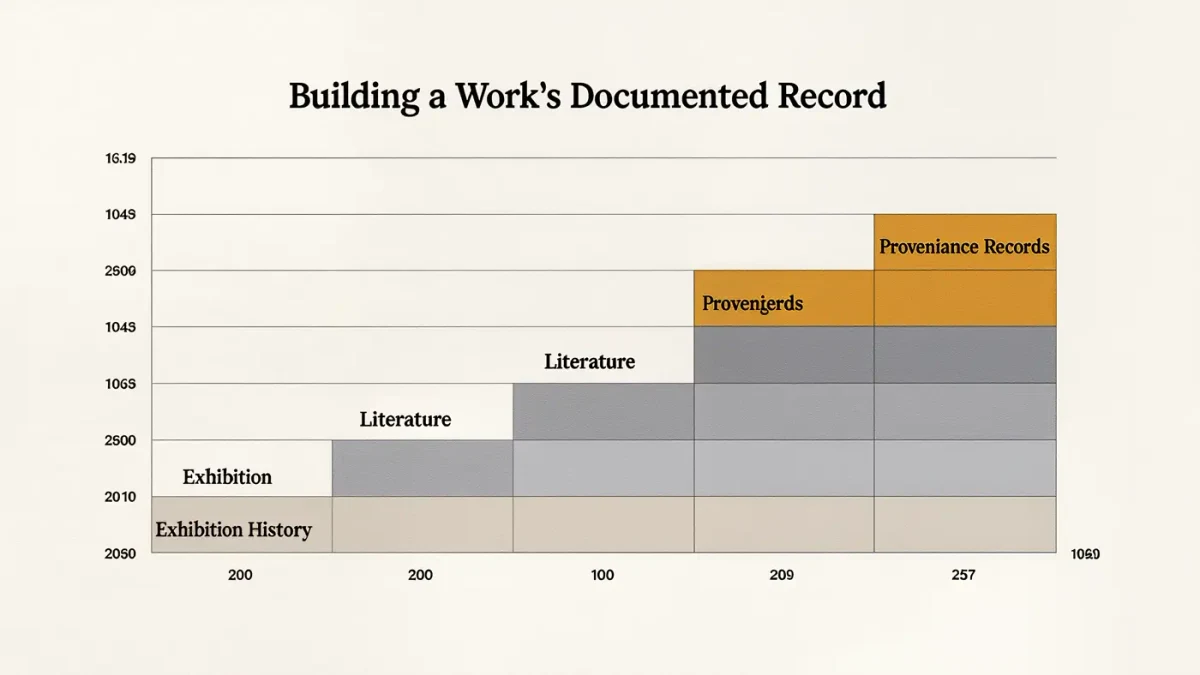
The transmission from museum wall to price level runs through documentation. Exhibition history is the core of an artist's cv as read by every subsequent curator, auction specialist and appraiser; a survey entry on that cv changes the category the market files the artist in. The observable pattern across recent decades is consistent: primary prices step up around the survey announcement; secondary-market results follow after the exhibition, as collectors who saw or read about the show enter bidding; and the effect is largest for artists whose markets were regionally confined before the institution nationalized — or internationalized — them.
| Show format | Career claim | Typical market effect |
|---|---|---|
| Focused exhibition | One period or body of work | Validates that segment's prices |
| Mid-career show | Development merits narration | Primary price step-up |
| Survey (major museum) | Significance now | Announcement-window repricing; new collector pool |
| Traveling survey | Significance, multiple markets | Compounded press and demand geographically |
| Retrospective | Historical completeness | Canonical repricing; estate-level effects |
Two caveats keep the analysis honest. The market front-runs: by the time a survey opens, much of the validation is already in prices, and buying at the opening is buying the top of the announcement cycle. And the effect is conditional on the show being good — a widely panned survey of a market darling is the rare institutional event that can soften rather than harden a price level, because it supplies evidence against the consensus.
Why Retrospectives Belong to History
The retrospective is also an act of closure. It fixes chronology, settles questions of which periods matter, and — through the catalogue raisonné projects it often catalyzes — begins the process of authenticating the corpus. For estates, a retrospective is the moment a market transitions from career management to canon management: fewer speculative buyers, more institutions, longer holding periods. Collectors who understand this lifecycle buy the survey, not the retrospective; the retrospective is where the premium has already been fully paid.
The Loan Politics Nobody Puts in the Press Release
The invisible labor of a big show is persuasion. Every museum-held work on the checklist required a formal loan request, a facilities report demonstrating the borrowing institution's climate and security credentials, and often a courier from the lending museum who accompanies the work and returns with it — costs and negotiations that consume curatorial calendars for years. Private lenders extract softer consideration: acknowledgement placement, exhibition copies, occasionally a say in installation, and the quiet appreciation that their asset will be published, cited and re-valued by association. The artist's dealers negotiate their own stakes, since a survey anchors the market's perception of which periods matter, and a checklist generous to the early work can redirect demand toward inventory the gallery happened to hold. None of this diminishes the scholarship; it explains its texture. When a survey dedicates three rooms to a period the market had ignored, the omission was a choice with beneficiaries — and reading the checklist against the dealer inventory it favored is the kind of analysis the market performs within hours of the announcement, entirely without resentment.
What to Ask When a Survey Is Announced
Announcement day is when the disciplined questions get asked, in order: which museum, and is the show traveling; which curator, and what did their last survey argue; what checklist rumors are circulating, since the balance of early versus late work previews the thesis; who is funding it; and where the artist's primary prices sat before the news. The answers sketch the repricing window before the market has fully marked it, which is the only moment the information is still cheap.
FAQ
What is the difference between a survey and a retrospective?
A survey covers a substantial arc of a living artist's development and asserts current significance; a retrospective claims comprehensive coverage of the whole career and traditionally carries an end-of-career or posthumous connotation. Market effects are similar in direction but differ in scale and timing.
How far in advance are museum shows planned?
Typically three to five years for major surveys and retrospectives — committee approval, loan negotiations, catalogue commissioning and funding all take time. The announcement itself, years before opening, is often the market-moving event.
Do museum exhibitions raise artist prices?
Systematically, with a lag. The pattern is a primary-price step-up around the announcement, then secondary-market strength after opening as new collectors enter. The effect is largest for artists previously confined to regional markets.
Can a museum show ever hurt an artist's market?
Rarely, but yes — a major survey that receives poor critical reception supplies evidence against an artist's consensus standing, and for a market darling that is the one institutional outcome that softens rather than hardens prices.
Who funds these exhibitions?
Largely grants and individual patrons rather than the museum's general budget, and lead supporters are frequently collectors of the artist in question — an overlap of enthusiasm and self-interest that the market reads without comment.