What is a biennale, structurally? It is a recurring international exhibition — the Venice Biennale, founded in 1895, is the template and still the reference point — built around a single artistic director's thesis rather than a dealer's inventory. Where a fair sells, a biennale argues: the main exhibition, curated around a declared theme, plus national pavilions in which countries present single artists or curated groups, plus collateral events spread across the host city. Critics measuring Venice are not measuring objects; they are measuring whether a curatorial argument about contemporary art survived contact with several hundred artworks and several hundred thousand visitors.
The Venice Machine, Briefly
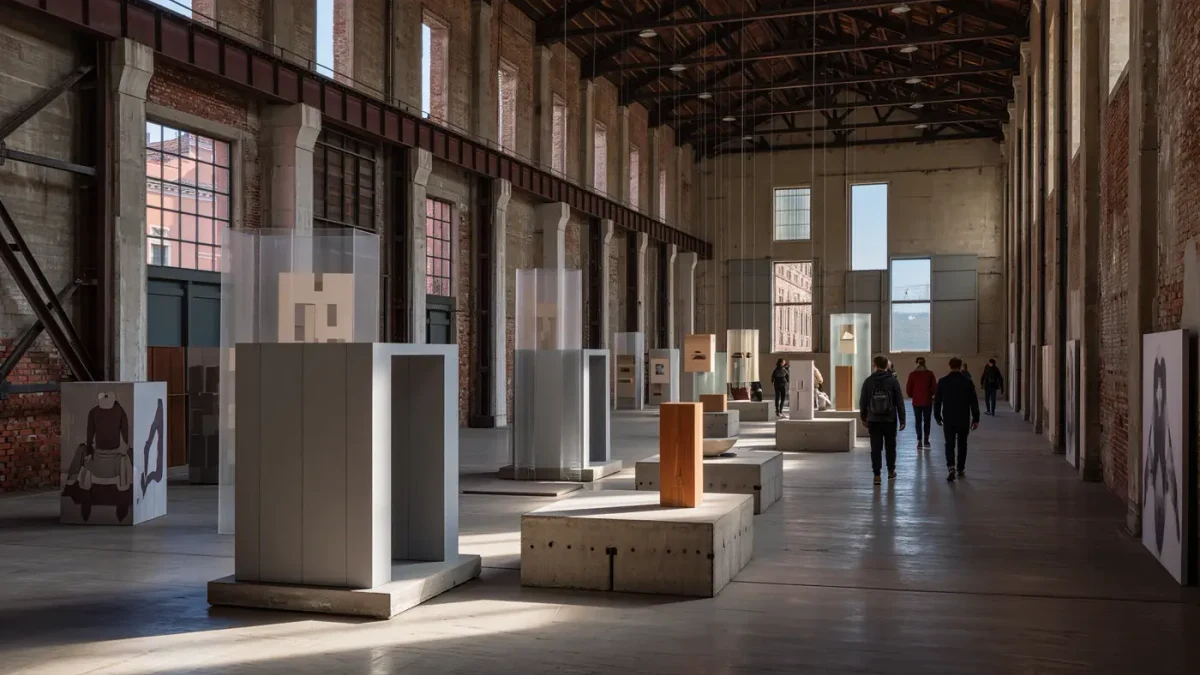
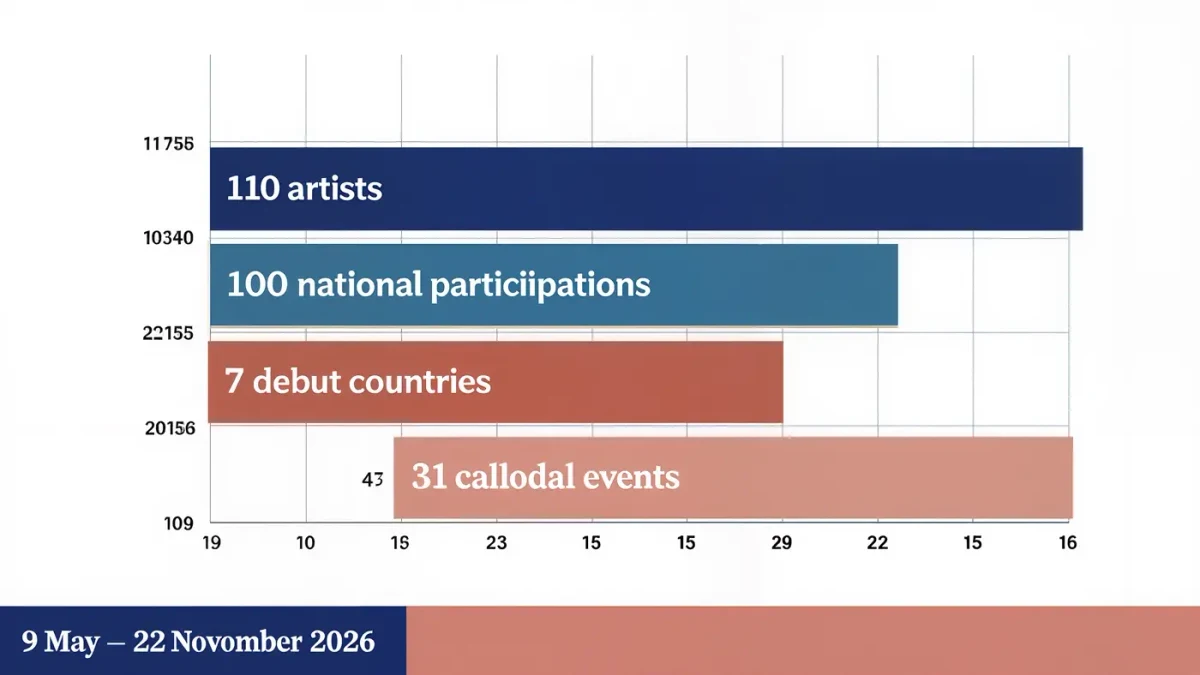
La Biennale di Venezia runs on a two-year cycle (hence the name) in the Giardini and the Arsenale. The main exhibition is commissioned from a single artistic director — a curator appointed years in advance, whose chosen theme is the intellectual headline of the edition. Around thirty national pavilions stand in the Giardini as permanent buildings, national property, each presenting its own selection; dozens more countries rent spaces across the city. The structure means Venice is simultaneously one exhibition and fifty: a curated core surrounded by a constellation of sovereign statements, each judged by its own national politics as much as by art.
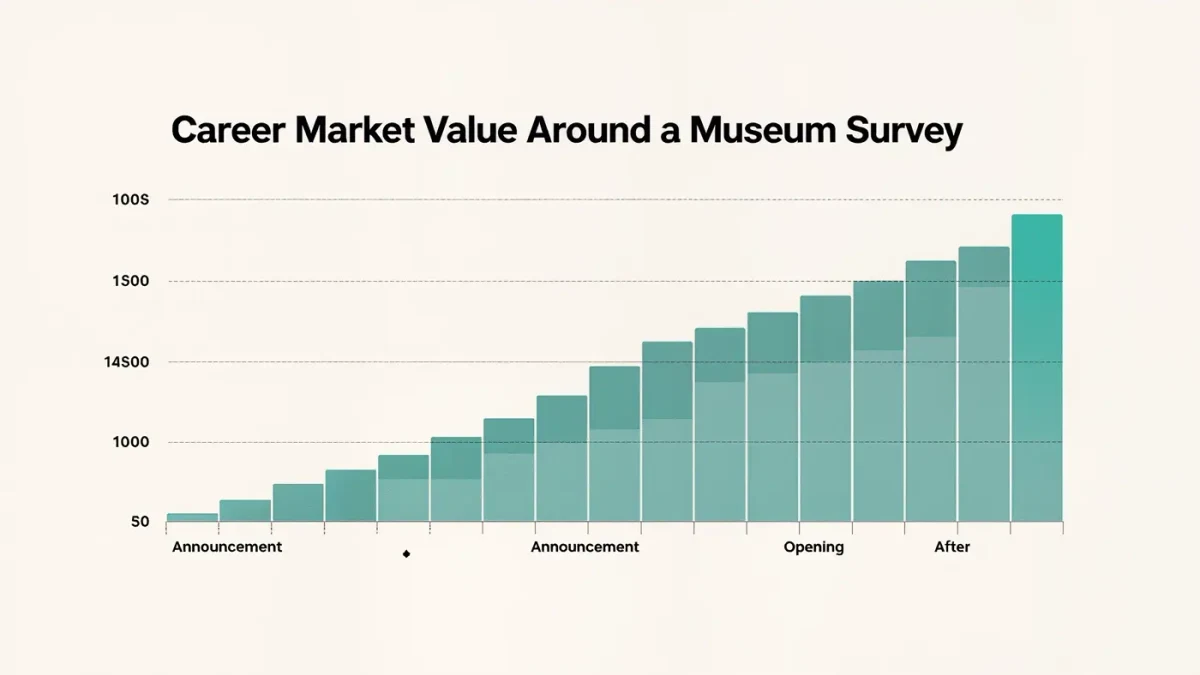
The Golden Lion, awarded to a participating artist and to a national participation, is the format's Oscar — a career-defining institutional validation that reliably reshapes the winner's market. A special-prize-winning pavilion appearance functions, commercially, like a museum survey compressed into a summer: acquisition committees visit, prices move in the following season, and the winner's gallery gains a waiting list it did not have in April.
The Format's Mechanics Elsewhere
Dozens of cities run biennales on the same skeleton — Documenta in Kassel, though held every five years, is the format's intellectual heavyweight; Sao Paulo, Whitney (the New York museum's recurring survey), Gwangju, Sharjah, Istanbul and many others localize the model. The shared mechanics: an appointed curator or curatorial team, a thematic frame, a mix of commissioned new work and loans, a prize or honorific structure, and a run measured in months. What differs is governance — Venice's national pavilion system has no exact replica — and market temperature: the European and Asian mega-biennales are market events in a way smaller regional editions are not.
What the format is for
Three functions recur. Discovery: biennales showcase artists without gallery price levels attached, making them the primary research venue for curators and adventurous collectors. Legitimation: participation is a line in a biography that institutions treat as independent validation, precisely because no dealer controls the selection. Agenda-setting: the curatorial theses of successive editions — the themes, the argued genealogies of contemporary practice — seep into museum programming and MFA seminars for years afterward, regardless of whether any individual visitor was convinced.
What Critics Actually Measure
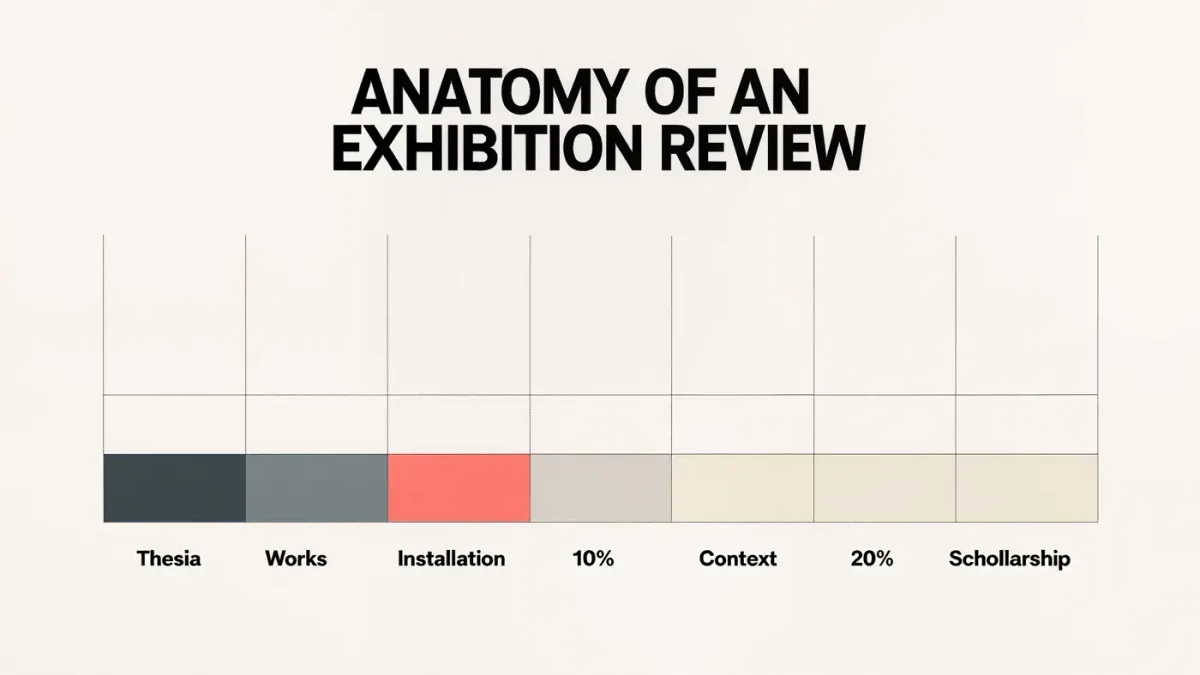
Biennale criticism has developed its own evaluation template, and its criteria differ from exhibition review in scale and emphasis.
- Thesis survivability. Did the declared theme organize the works, or was it wall-text decoration? The classic biennale failure is a compelling essay followed by rooms that could have been hung under any slogan.
- Discovery ratio. What share of artists were genuinely new to the international circuit versus the rotating regulars? Critics count, uncharitably.
- Narrative engineering. The route through Giardini and Arsenale is itself an argument; the pacing, juxtapositions and density get reviewed like composition in music.
- The pavilion scorecard. National choices get judged against national politics — the pavilion is one of the few places where a country's cultural bureaucracy produces legible contemporary output, and critics treat blatant career-retread choices as wasted slots.
- Prizes as validation of the argument. A Golden Lion to an unexpected artist retroactively frames the edition's thesis; a prize to an establishment figure reads as the jury declining the curator's bet.
The Market Shadow of a Non-Market Event
Biennales officially sit outside commerce — no sales booths — but the art world schedules itself around them precisely because they are the circuit's discovery engine. Galleries time solo shows to coincide with a Venice appearance; collectors plan buying trips to the preview week, overlapping with the fair calendar; the prize announcements are read by the market as buy signals with a lag of one season. The disciplined read: biennale participation is strongest evidence for artists early in institutional accumulation, and progressively weaker evidence for careers already priced in. The format's real currency — narrative inclusion — depreciates once an artist becomes canonical enough that inclusion is automatic.
The Economics of a Non-Commercial Machine
Running one of these exhibitions is a feat of subsidized logistics. A Venice-scale edition costs tens of millions of euros to mount — national pavilion contributions, artist production budgets, shipping on a scale rivaling mid-sized museums, and a permanent organization that survives between editions on public funding, sponsors and ticket revenue between the arms-length interventions of the state and the market. Artists making new work for the main exhibition typically receive production support rather than fees commensurate with the exposure, a trade the participants accept because the validation economics run one way: the biennale confers institutional standing, and institutional standing is later monetized by galleries and auction houses that had nothing to do with the show. This separation is the format's credibility mechanism and its permanent irony — the least commercial event in the art calendar generates some of the most commercially consequential signals of the two-year cycle, and everyone involved politely agrees not to mention the mechanism aloud during the preview week cocktail hours.
How to Visit Like a Professional
The working visit is a planned campaign, not a stroll. Preview days are for the main exhibition with the thinnest crowds the format ever offers; the pavilions are best attacked geographically — Giardini cluster first, Arsenale deep second, off-site national participations on a mapped route across the following days. Read the curator's statement before entering, then test it against the rooms; the gap between the essay and the installation is the review you would write. Attend one day of the professional program if accessible, because the conference sessions reveal which arguments the field is actually having. And keep notes on discovery: the artists you had not encountered are the entire research yield of the format — a list of twenty names, checked six months later against who received gallery attention and museum shows, is the single best free education in how the institutional pipeline operates. The biennale rewards preparation in direct proportion to how much it pretends to be a leisure outing.
FAQ
What is the difference between a biennale and an art fair?
A fair is a commercial marketplace where galleries sell from booths; a biennale is a curated, non-selling exhibition organized around a thematic argument. The same preview week serves both, but a biennale's product is narrative and validation, not transactions.
Why is Venice still the reference biennale?
Seniority and structure: founded in 1895, it pairs a single thematic main exhibition with permanent national pavilions, giving it both curatorial authority and a geopolitical dimension no younger edition replicates. Its Golden Lion remains the format's most career-defining prize.
Do critics review every pavilion?
The major outlets attempt a scorecard of highlights and failures rather than exhaustive coverage. Pavilions are judged both as exhibitions and as national cultural statements, which is why politically timid selections draw disproportionate criticism.
Does biennale participation raise an artist's prices?
Often, with a lag. The exhibition is non-selling, but participation is treated by museums and collectors as independent validation, and Golden Lion winners in particular see acquisition interest and price adjustments in the following season.
What is Documenta, and is it a biennale?
Documenta in Kassel, Germany, runs every five years rather than two, but belongs to the same genre: a curator-led, thesis-driven international exhibition. It is generally treated as the most intellectually weighty of the recurring mega-exhibitions.