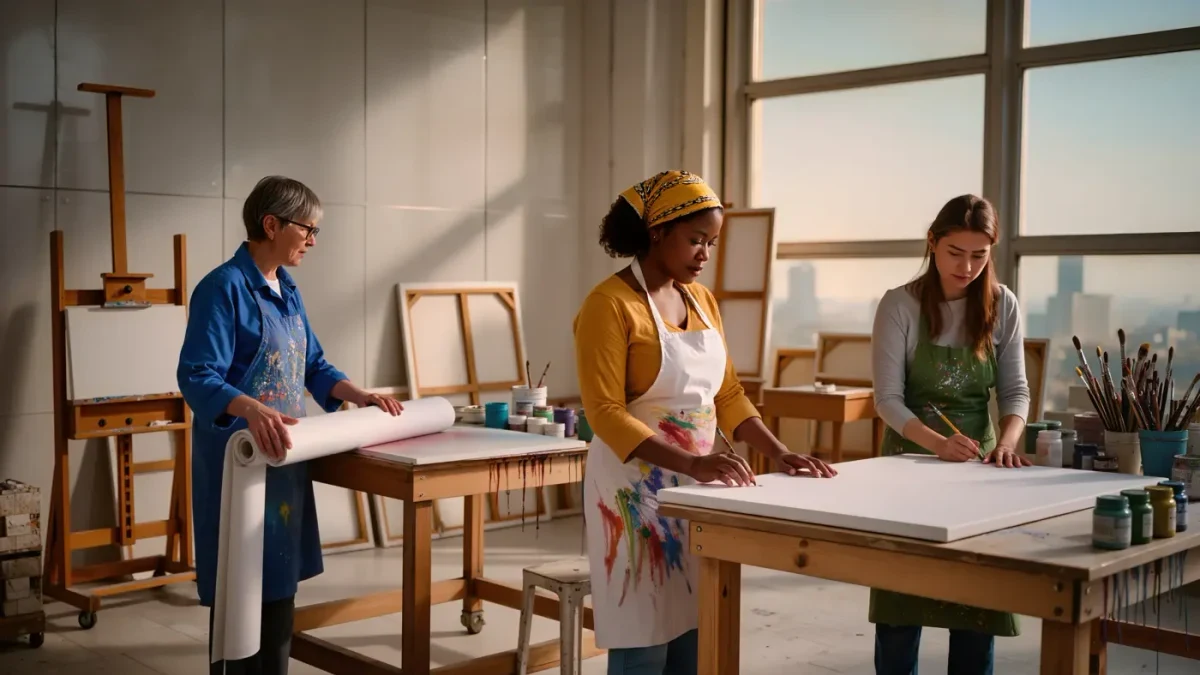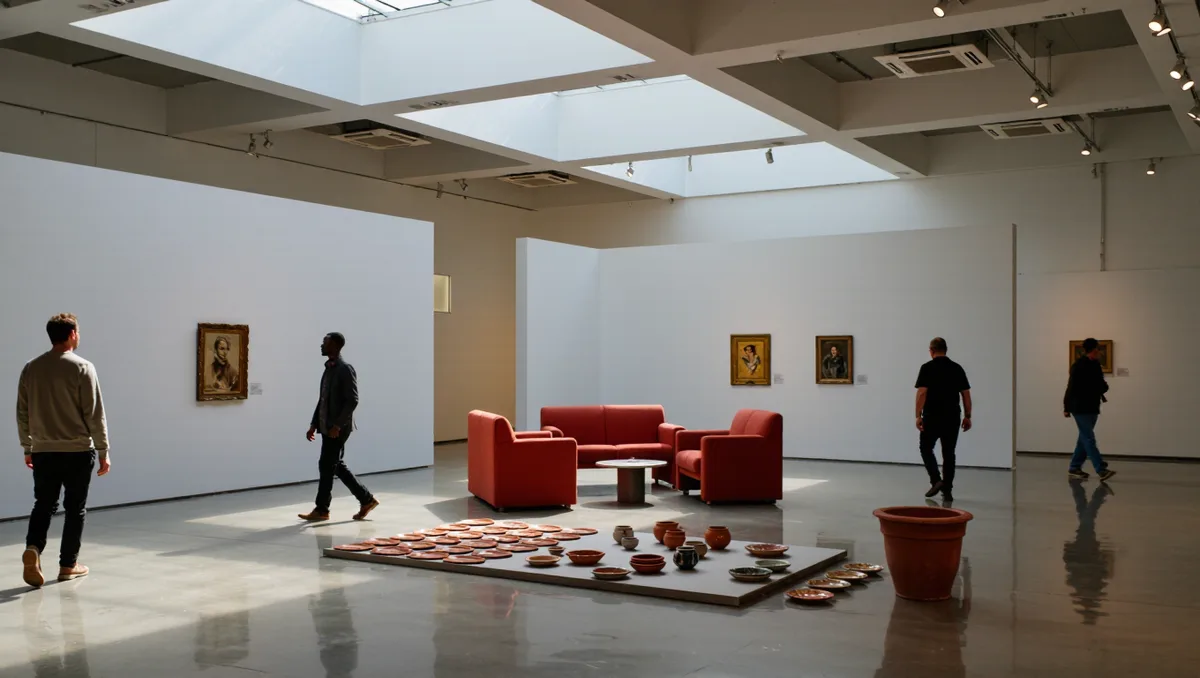
The line between craft and fine art is not a fact about objects. It is a ranking system, built by academies, museums, and markets over two centuries, that treated useful things—pots, quilts, woven cloth—as lesser because they had a function. The line keeps moving because the function never actually went away: a ceramic vessel can carry glaze and concept at once, and the market has learned to pay for both.
The short version: craft is skill applied to materials, often toward a use; fine art is what the institutions say sits above it. What has changed is that museums now hang fiber and clay on white walls, collectors pay gallery prices for them, and the old vocabulary—"decorative," "applied," "utilitarian"—reads increasingly like a period piece. The hierarchy persists mainly as a pricing habit, and pricing habits can be corrected.
Where did the craft versus fine art split come from?
The split is a product of the Renaissance academy and, later, the Industrial Revolution. As Wikipedia's entry on craft recounts, the word historically described skilled trades—small-scale production of goods, their maintenance, the workshop economy of the Middle Ages. Guilds governed training. An apprentice became a journeyman, then a master. Skilled makers sat above the unskilled urban poor in status, but below nobody's idea of a painter of altarpieces.
The Industrial Revolution did the rest. Mass production pushed handmade work into niches that factories could not serve, and the division of labor between industry and craft hardened into a division of prestige. Painting and sculpture claimed the realm of mind; clay and cloth were assigned the realm of hand. The insult was baked into the category names: "decorative arts," "applied arts," as though the work were an accessory to something real.
One useful corrective from the same history: craft was never low-status work in absolute terms. It required apprenticeship, education, and often urban concentration and guild protection. The hierarchy that demoted it is younger than the skills themselves.
What actually separates craft from art?
The honest answer is that the criteria keep shifting to protect the ranking. Function was the classic test—but painting once had a function (devotional, documentary, propagandistic), and nobody demotes Caravaggio for it. Uniqueness was another test—until printmaking, photography, and the whole editioned market complicated it. "Design intent" is the current favorite: art asks questions, craft answers needs. But a weaver deciding whether a textile reads as picture or as blanket is doing both at once.
Scholars of craft skill describe something the fine-art framework struggles to name. The Wikipedia entry notes that researchers see craft knowledge in particular ways of experiencing tools and materials—letting tools recede from awareness, perceiving relationships invisible to the untrained eye—and in the collective, learned nature of that knowledge. That is not a lesser form of creativity. It is a different one, closer to how a musician internalizes an instrument than to how a critic imagines inspiration.
The pragmatic test used by the market today is simpler: context and price. When a ceramic work enters a gallery roster, gets a catalogue essay, and sells at a five-figure price, it functions as fine art regardless of what it is made of. The material was never the deciding factor. The infrastructure was.
Why do ceramics and fiber keep erasing the line?
Because they are the categories the hierarchy was built to exclude, and they have spent a century walking through the door anyway. Ceramics has the cleanest arc: the vessel tradition—sculptural forms in functional shapes—sits exactly on the boundary, and every generation of potters has pushed the form further from the table and closer to the pedestal. Fiber followed a parallel route, with textile traditions reframed as painting's neglected cousin: grid, color field, composition, all present in cloth centuries before the modernists claimed them.
The Arts and Crafts movement is the historical hinge. As the Wikipedia account describes, it arose in late-19th-century Britain, led by William Morris, and argued that the handmade object carried moral and aesthetic weight that industrial production had stripped away. The movement did not topple the hierarchy—Morris's own products were still filed under decoration—but it planted the argument that the division itself was arbitrary. Contemporary ceramics and fiber artists are, in effect, collecting on that argument.
What this means for the reader: when a museum gives a fiber installation a main-floor gallery, or an auction house gives a ceramicist an evening-sale slot, the line has not been crossed. It has been redrawn, again, by the same institutions that drew it the first time.
How does the market treat the hierarchy now?
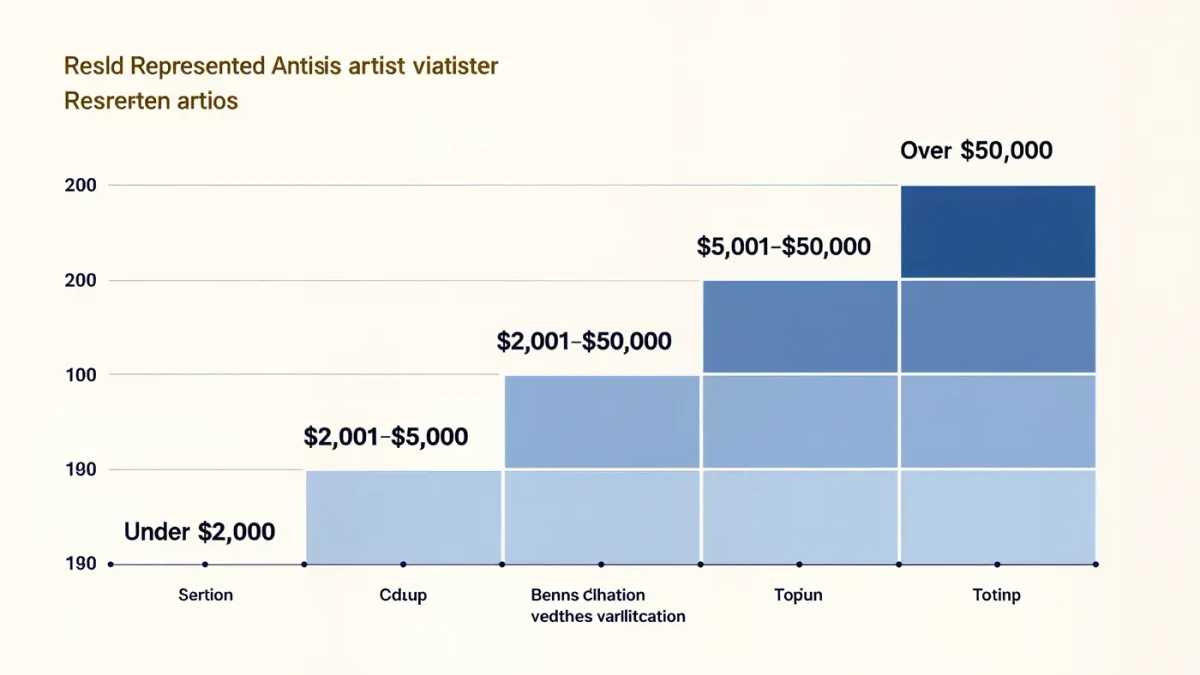
The market's treatment is best described as inconsistent, which is another way of saying transitional. Works in clay, glass, textile, and wood still trade at a discount to painting of comparable ambition at most price levels—a structural bias, not a quality verdict. But the discount narrows wherever institutional validation arrives first: museum acquisitions, biennial inclusion, blue-chip gallery representation. The pattern mirrors what has been documented elsewhere in the market, where institutional endorsement is the mechanism that moves prices—something covered in detail in the persistent price gap for women artists and the institutions pushing back on it. Craft media carry a comparable discount, for comparable reasons: a century of category exclusion, now slowly repriced. Readers following this should also see Women Artists and the Market: A Persistent Price Gap, a Slow Correction, and the Institutions Pushing It.
The gallery system is the gate. A maker working in fiber who signs with a contemporary gallery enters the same pricing corridor as a painter—the same consignment terms, the same fair calendar, the same collector base. One explained in how gallery representation actually works, from the 50/50 split to shared rosters. A maker who sells directly—through fairs, studio sales, or online—faces the ceiling that direct sales always carry, whatever the material. That ceiling and its workarounds are the subject of selling without a gallery. This connects to our earlier piece, How Gallery Representation Actually Works, From the 50/50 Split to Shared Rosters.
Our analysis: the hierarchy survives least where the market has the least excuse for it. A collector who will pay a premium for a unique object with a documented exhibition history has no principled reason to discount it for being earthenware. The discount is a legacy of vocabulary, and vocabulary changes faster than kilns cool.
What should a collector or artist take from this?
For collectors, the practical takeaway is to price objects by the same criteria used for everything else—provenance, exhibition history, condition, rarity, the artist's institutional standing—and to notice when the word "craft" is doing evaluative work it has not earned. The category tells you about materials and training. It does not tell you about significance.
For artists working in these media, the strategic question is infrastructural, not material: which galleries show work like yours, which museums collect it, and which fairs carry it. The hierarchy erodes one roster and one acquisition at a time. The artists best positioned are those who make the institutional case—catalogues, essays, curatorial relationships—rather than waiting for the category to be upgraded from above.
What remains unresolved is the deeper question the hierarchy was never designed to answer: whether the useful and the significant are opposites at all. The evidence of the last several decades suggests they never were. The line keeps moving because it was never standing on anything solid.
The craft label describes what something is made of and how it was learned. It has never reliably described what the object is worth—or why.