Artists for Humanity is a Boston organization that puts teenagers to work as paid artists. They make professional work for real clients, in a real studio, and they take home a paycheck for it. The premise sounds almost too plain to be radical: treat a sixteen-year-old with talent the way the market treats everyone else.
That plainness is the point. Most youth arts programs stop at enrichment—after-school hours, donated supplies, a show at the end of the term. Artists for Humanity runs on employment instead. The work has a client, a deadline, and a wage, which changes what the studio is and who the teenagers are inside it.
The model keeps spreading because it answers a question most programs dodge: what does a young artist actually need? Not encouragement, the argument runs, but practice under professional conditions—plus the small, durable fact of money earned by making things. Anyone who has followed how the wider art world treats early careers will recognize the gap this fills; the economics of a working studio are unforgiving even for adults, as the economics of the artist studio make clear, and they are harsher still for teenagers with none of the usual safety nets.
What is Artists for Humanity, and how does it work?
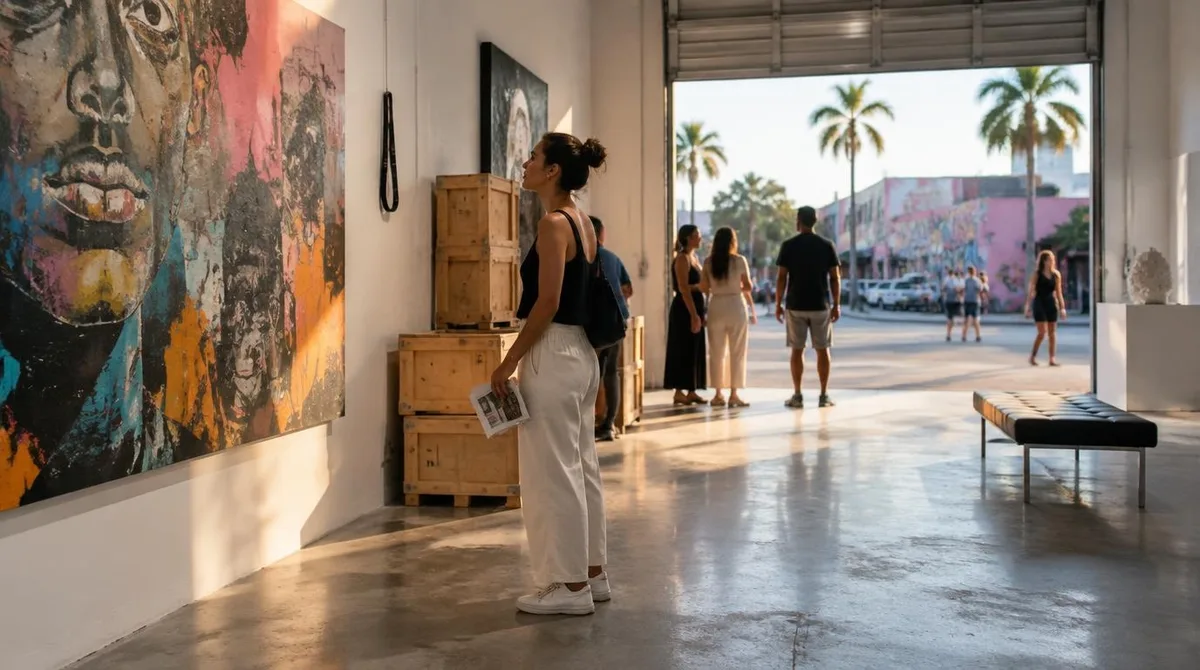
At its core, Artists for Humanity is a design and art studio that employs Boston teens. The young artists—many still in high school—work on commissions: murals, graphic design, photography, painting, fabrication. Clients come to the organization, the studio takes the brief, and the teens produce the work under the guidance of professional mentors. The compensation is the load-bearing wall. Teens are paid employees, not scholarship recipients, and the distinction shapes everything else.
Employment changes behavior in ways enrichment cannot. A paid commission has stakes. The drawing has to survive a client meeting. The mural has to hold up outdoors. The deadline is real, and so is the invoice. A teenager who has met a corporate client, revised a design twice, and delivered on time has learned something no portfolio class quite teaches.
The structure also inverts the usual hierarchy of arts education. Instead of a master teacher handing down technique, the studio runs on production—work flowing in, teams forming around it, mentors advising rather than directing. It is closer to how a small design firm operates than how a classroom does, and that resemblance is deliberate.
Why pay young artists instead of just teaching them?
Because payment is the clearest signal that the work matters. The art world is famously squeamish about money, but it runs on money all the same, and the earlier a young artist learns to read that system the better. The first-sale corridor—how emerging artists get priced, and who really sets the number—is opaque even to adults with gallery representation, as guides to emerging artist pricing lay out. A teen who has already negotiated a commission starts that education years ahead. We covered a connected angle in How Emerging Artists Get Priced: The First-Sale Corridor and Who Really Sets the Number.
There is a historical irony worth sitting with. Recognition in art often arrives late; many of the names now fixed in the canon were barely rewarded in their own lifetimes. As My Modern Met notes in its survey of famous artists, figures from Botticelli to Frida Kahlo achieved their fame through style, movement, or sheer distinctiveness—and many were not recognized for their talents until decades after their death. Paying young artists flips that timeline. It says the talent in front of us is worth money now, not posthumously.
It also says something practical about access. Studio space, materials, and time are expensive, and the teenagers most likely to have artistic ability are often the least likely to have those things. A wage removes the gate. The kid who would otherwise be working a retail shift spends the afternoon painting a commissioned mural—and gets paid roughly as if it were a job, because it is one.
What do the teens actually make?
The output spans the commercial art spectrum. Murals for businesses and institutions. Branding and graphic design work. Photography, screen printing, painted canvases, sculptural fabrication. The mix matters: it forces young artists to move between fine art and applied work, a boundary that the wider field keeps redrawing anyway, as the long argument over craft versus fine art shows. Teens who paint a canvas on Monday and a storefront sign on Thursday learn early that the line is thinner than the textbooks claim.
The client list is the other quiet advantage. Working for actual organizations—companies, hospitals, nonprofits—means the work leaves the studio and lives in the world. It gets seen by people who did not come to see it. That is a different kind of audience than the school-gallery crowd, and arguably a better training ground for the reception an artist's work eventually gets in museums and public space.
Why does the model keep spreading?
Because it is replicable in a way most arts-education innovations are not. It does not depend on a charismatic teacher or a rare funding windfall. Its core mechanic—pay teens to fulfill real commissions—is legible to any city with businesses and teenagers. The spread reflects a broader shift in how funders think about youth arts: away from prevention narratives and toward workforce development, away from art as therapy and toward art as labor.
The model also travels because it solves a staffing problem for the clients. Organizations want murals and design work; professional studios charge professional rates; teens cost less and often bring energy the brief needs. Everyone in the transaction gets something they wanted. Programs built on mutual benefit survive budget cycles. Programs built on charity alone often do not.
Our analysis: the deeper reason the model spreads is that it reframes who counts as an artist. The conventional pipeline—BFA, MFA, assistant gigs, first solo show—filters by credentials and cash reserves, and it filters out exactly the people these programs serve. A paid teen studio is a parallel track. It will not replace gallery representation or the degree route, but it demonstrates that the pipeline was a choice, not a law of nature. Residencies and fellowships already pay artists to work; what artist residencies are actually worth is a live debate precisely because stipends and studios change careers. Extending that logic to sixteen-year-olds is less a leap than a correction. Readers following this should also see What Artist Residencies Are Actually Worth: Studios, Stipends, and the Career Math.
What are the limits of the model?
Honesty requires naming them. Paid teen studios do not, by themselves, solve the art world's distribution problems. A teenager who sells a mural to a local business has not thereby entered the market for blue-chip painting, and the gap between a first commission and a sustainable career remains wide. The program is a beginning, not a bypass.
There is also the question of scale. A studio model is labor-intensive: mentors, facilities, client development, payroll. It grows by opening new sites, not by scaling a single site infinitely, which means expansion is slow and uneven. And the wage, whatever it teaches, is a wage for teenage hours—not a living for a family. The program's honest claim is formative, not transformative: it changes trajectories, not outcomes, and it does so one paycheck at a time.
What the evidence of the model's spread establishes is that the idea works where it is tried and that cities keep finding it worth trying. What remains unknown is how far the correction reaches—whether a generation of artists who got their first paycheck at sixteen will, in twenty years, be the ones deciding who else gets paid. That is the experiment still running.