An artist house museum is a private home preserved and opened to the public as a museum, usually after the artist's death. The genre runs from Frida Kahlo's Casa Azul in Mexico City to Claude Monet's house at Giverny. The box office splits the field in two. Mount Vernon and Colonial Williamsburg top one million visitors a year, while more than half of historic house museums draw fewer than 5,000, per a survey by Peggy Coats.
The rest of the ledger is thinner still. The same 1990 survey found sixty-five percent of historic house museums without a full-time staff, and most running on less than $50,000 a year. Star houses are tourism engines. The rest are volunteer operations with great provenance. The genre sells a life, not a loan show. The inventory is fixed. The roof still leaks. Readers following this should also see Museums on Cape Cod for a Rainy Day, From a 4,000-Work Provincetown Collection to Sandwich Glass.
What Is an Artist House Museum?
A house of historic significance preserved as a museum, its furnishings often left in their original placement, per standard reference entries. The trade calls the type a memory museum: the inhabitant's belongings, kept for authenticity, become the whole show. The structure itself joins the collection, which turns every door handle into a catalog entry. Museums hold these sites to professional standards, including those of the International Council of Museums, though many small houses fall short. Some now invite living artists to respond to a site's history, folding new work into old rooms. The house becomes a venue.
Which Artist Houses Draw the Crowds?
Two names carry the genre. The comparison, per each site's reference entry:
- Casa Azul, Mexico City: Frida Kahlo's birthplace, home, and the site of her death. It counts about 25,000 visitors a month, among the city's most-visited museums and first in Coyoacán. Diego Rivera donated the house and its contents in 1957, per its reference entry.
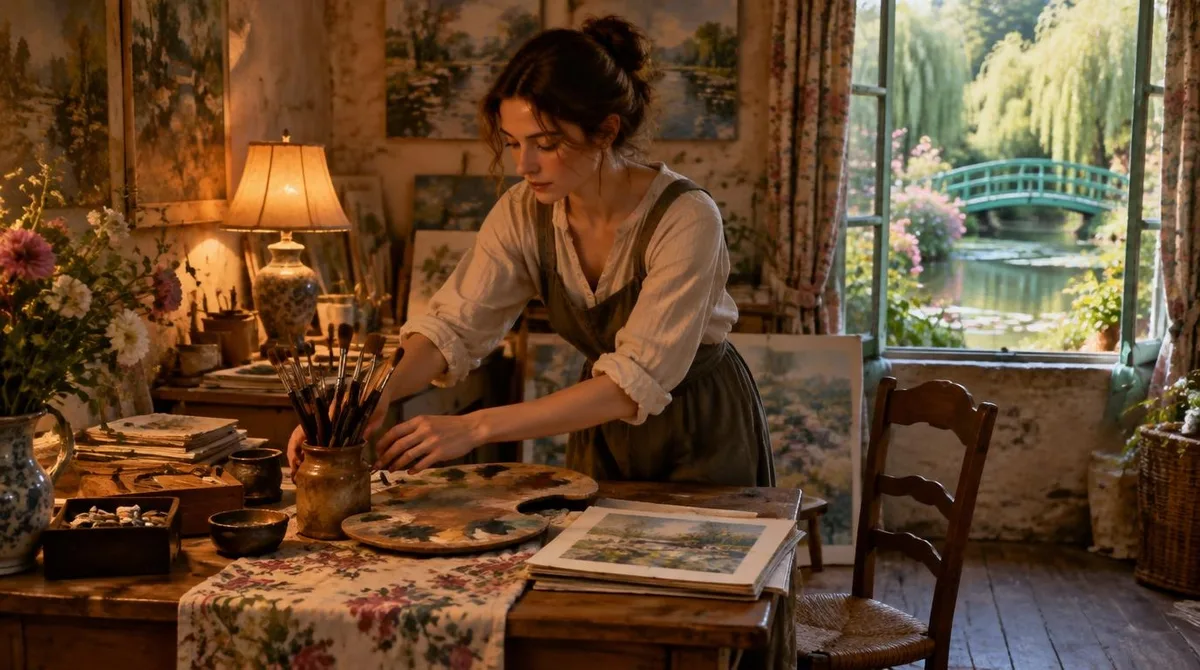
- Giverny, France: Monet's house and gardens, where he lived and painted for 43 years. The Fondation Claude Monet counted 530,000 visitors in 2010, second in Normandy behind Mont Saint-Michel, per the foundation's entry.
The gap between the stars and the rest is the genre's core fact. Most house museums never see a crowd like either one. Crowds fund preservation. The census decides everything else. That is the whole business plan.
Who Pays to Keep the Houses Standing?
Tickets, mostly, and donors when it counts. Casa Azul runs on ticket sales and donations alone, and its ticket also covers entry to Rivera's Anahuacalli Museum nearby. Giverny shows the donor model at scale. Its restoration carried a US$7 million price, and private contributions met about 95 percent of it, most via the Versailles Foundation-Giverny Inc. The estate was classified a monument historique in 1976. Dead artists are steady draws. Their foundations are steadier still. Both houses keep to a season, too. Giverny opens to visitors from April to November. This connects to our earlier piece, Museum Ticket Pricing Explained: Free Admission, Paid Entry and the Dynamic-Pricing Debate.
Why Keep the Rooms Exactly as They Were?
Because authenticity is the asset. Memory museums display the inhabitant's belongings, and the approach is mostly concerned with authenticity. At Casa Azul, the collection sits in rooms much as they were in the 1950s, down to Kahlo's final bedroom and studio upstairs. Visitors read the life through social history. Staff also choose which narrative to tell, which is the quiet editorial act of the genre. Homes passed down through generations carry more than one story. Someone picks.
Conclusion: The House Is the Retrospective
The artist house museum compresses a career into an address. The stars prove the model: 25,000 visitors a month in Coyoacán, 530,000 a year at Giverny, and seven figures of private giving for a French garden. The median house proves the risk: no full-time staff, a thin budget, and a story told by volunteers. A house is a retrospective the artist already curated. The market just decides how many people buy tickets to it.