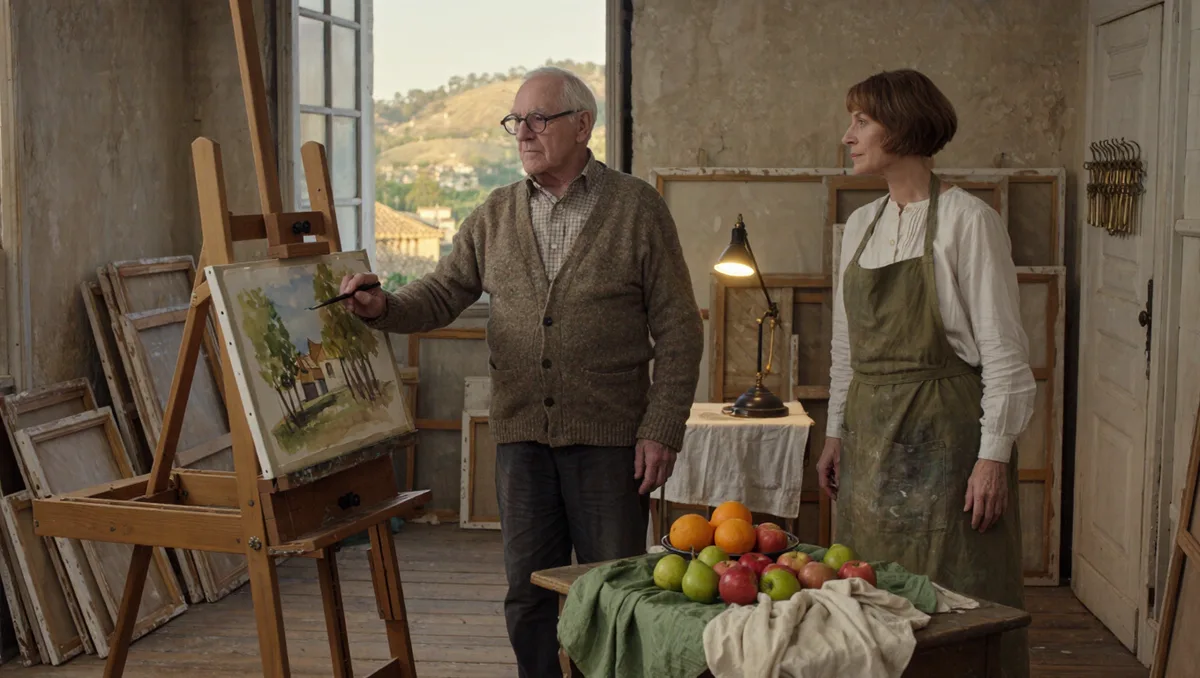
What is the Florencita Art Gallery? It is a members' studio and teaching space in Montrose, California, that has served painters in the La Crescenta area since the mid-1940s. According to Crescenta Valley Weekly, it offers watercolor classes and live-model drawing and painting for artists of every skill level, and membership comes with a key that opens the studio at any time.
The name misleads newcomers, and that is the first thing to unlearn. The Florencita is closer to a private club for working hands than to the kind of exhibition halls covered in our museums coverage. Eighteen active members hold keys today, with additional non-members attending classes. The building holds two large studios, a kitchenette, two bathrooms, and stations for still-life setups. Readers following this should also see How Museums Actually Acquire Art: Committee Votes, Dollar Thresholds, and the Rules on Deaccessioning. We covered a connected angle in How Museums Actually Acquire Art: Committee Votes, Dollar Thresholds, and the Rules on Deaccessioning.
Where did the Florencita come from?
The gallery traces its roots to the Business Men's Art Institute, founded in 1930 and incorporated in 1943. The BMAI, as it was known, started out on Beacon Avenue and moved to its current address at 2228 Florencita Avenue in Montrose in 1992. By 2021, women had joined the membership in growing numbers, and members changed the name to Florencita Art Gallery to reflect the organization as it had become.
The founding name tells you the original brief: a place where men with day jobs could paint. That amateur focus never left. The organization has historically centered on amateur artists, hosting art shows, painting demonstrations, and gallery tours. Members once took field trips to the desert and Laguna Beach, and sometimes visited the former MGM studio lot in Culver City for painting outings.
What happens inside the studio?
Two things: classes and open access. During live-model sessions, about 30 students set up easels to paint or draw clothed and nude models. Some artists spend one or two weeks on a single piece. Others work the same subject from different angles, which is the oldest trick in the atelier playbook and still the most useful one. Materials run from charcoal to oil paints.
Membership buys more than instruction. A key provides access to the studio at any time, along with easels and drawing benches. "It provides a remarkable facility for people who wish to paint, primarily for painters," gallery president David Block told the paper. "We have a drawing class as well as a facility for people to do their art in a space. It's large, we have perfect lighting, we have the facilities for live models and still lifes, we have easels, drawing benches – everything you would need as an artist."
Kevin Turcotte, one of the organizers of the live-model painting class, put the practice in plain terms. "It's like going to the gym, in a way. We weren't experts when we started. It takes time, but we continue to show up and learn, to improve our skills," he said. The gallery welcomes everyone from beginners to professional storyboard artists looking to try a new medium. For regulars, the classes are a chance to develop skills, learn from other artists, and carve out time for creative work.
Why does Norman Rockwell keep coming up in the story?
Because the institute's guest list once read like an illustration hall of fame. In 1948, more than 150 members gathered to hear Norman Rockwell, the famed illustrator, and Clyde Forsyth, a landscape painter. The institute was also featured in Life magazine, and the Russian artist Sergei Bongart taught classes there until 1985. The gallery is described as once associated with renowned artists such as Rockwell, which is a heavy pedigree for a storefront behind a used-book shop.
That history is worth separating carefully. Rockwell spoke to the group; the record supplied here does not say he was a member or painted there. For institutions of any size, borrowed prestige and actual programming are different things, a distinction that matters in large collections too, as our explainer on how museums actually acquire art makes clear. What the Florencita did on its own account is teach: Bongart's classes ran through 1985, and the live-model sessions continue now. We covered a connected angle in How Museums Actually Acquire Art: Purchase, Gift, Bequest, and the Rules on Selling. Readers following this should also see How Museums Actually Acquire Art: Purchase, Gift, Bequest, and the Rules on Selling.
What can a newcomer learn from a place like this?
Three lessons, none of them about talent. First, access beats ambition: a key to a lit studio with easels and benches removes every excuse between an artist and the canvas. Second, repetition is the curriculum. The live-model format, where 30 people circle the same pose for weeks, teaches more than any single finished picture. Third, institutions survive on small numbers. Eighteen active members, plus class drop-ins, have kept a 1930 organization alive into the 2020s.
Block's own pitch is disarmingly modest. "For those interested in painting as a hobby or a passion, we are the best-kept secret in the area," he said. "If you're interested in improving as a painter, you can come to a class and be exposed to great painters that way, or you can come to use the studio whenever you want. That's rare."
For readers mapping the wider terrain, the Florencita sits at the opposite end of the art-world spectrum from the auction houses and blue-chip dealers we track in our galleries section. It is a room with good light, a model stand, and a waiting list of zero pretensions. The evidence here establishes its history, its facilities, and its current program; what remains unknown is how many of its 18 members will still be paying dues a decade from now, and whether the next name change is another 80 years away.