Boston's galleries sit in a handful of walkable clusters, mostly in the Back Bay and the South End, and a first-timer can see a dozen shows in an afternoon without spending a dollar. The one qualification: hours vary by gallery and by season, so check websites before setting out rather than trusting a fixed schedule. What follows is a map of where the clusters are, a plan for walking them, and some reassurance about the door.
The city's commercial gallery scene is small by New York standards, which is exactly what makes it approachable. The spaces are close together, the gallerists are often standing in the room, and nobody expects you to buy anything. According to Merriam-Webster, "first" means preceding all others in time, order, or importance — which is a useful reminder that a first gallery visit is allowed to be tentative. Nobody is grading you.
Where do Boston's galleries actually cluster?
Two neighborhoods carry most of the weight. The first is the Back Bay, where Newbury Street's nineteenth-century townhouses have housed commercial galleries for decades. The street's ground floors turn over constantly — boutiques replace galleries and galleries replace boutiques — but on any given visit you can usually find a stretch of shows between the public library and Massachusetts Avenue. The brownstone interiors are narrow and tall, so works hang in deep, parlor-like rooms rather than the long white halls of Chelsea.
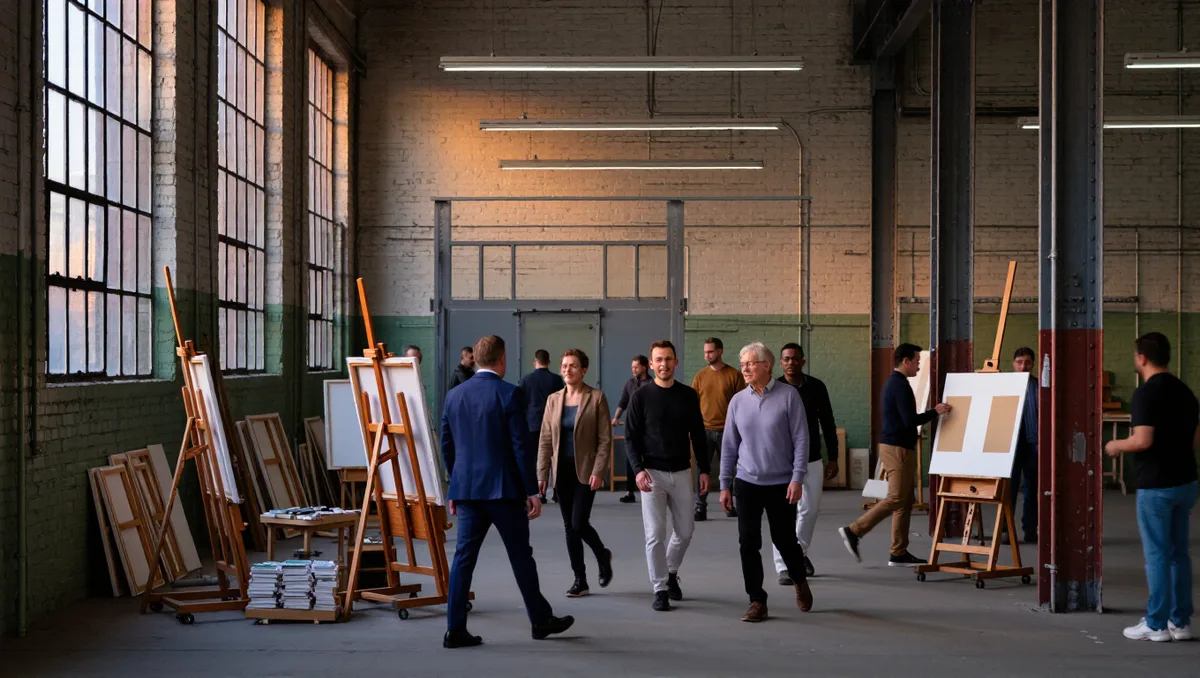
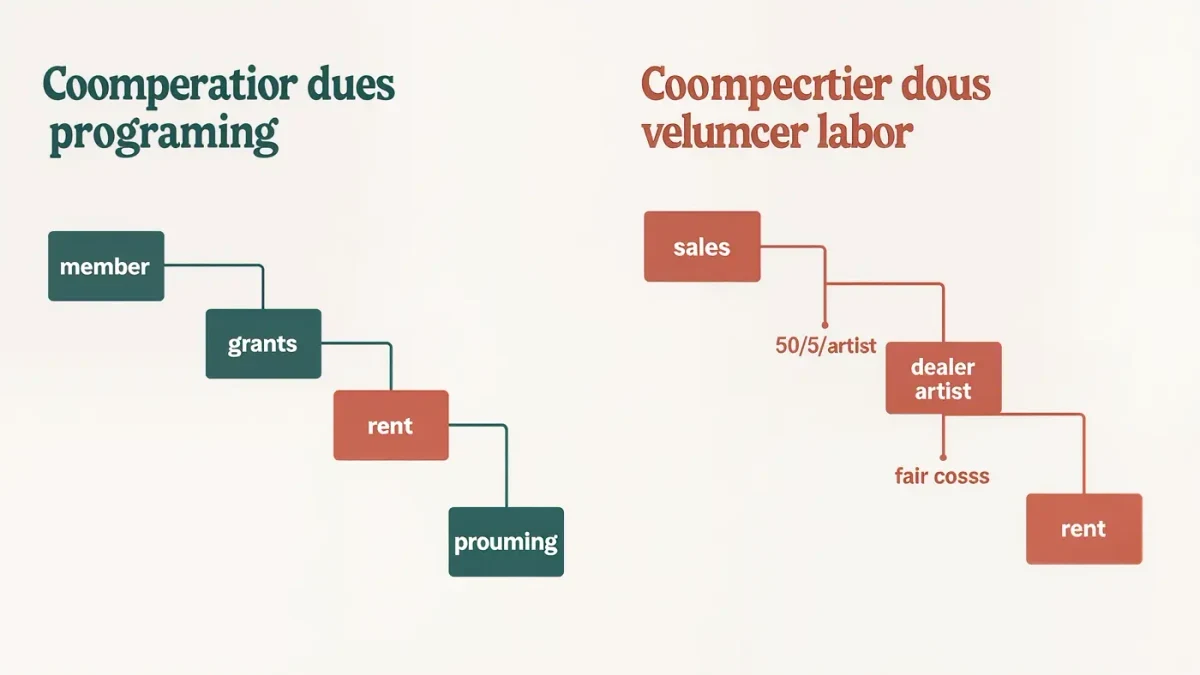
The second cluster is the South End, around Harrison Avenue and the streets feeding into it, an area long known as SoWa. Former industrial and warehouse buildings gave the galleries here higher ceilings and wider walls, so the shows skew larger: big canvases, sculpture, installation. The South End also holds artist-run and cooperative spaces alongside the commercial ones, and the difference matters — coops are run by the members themselves, on dues and jury committees, and tend to show riskier local work. For a fuller account of how those spaces function, see Artist-Run and Cooperative Galleries: Membership Dues, Jury Committees and the Road to Institutions.
Beyond those two poles, the picture is scattered. Greater Boston's studio buildings and satellite spaces — including the artist incubator scene in Lynn, covered in Inside the Galleries at Lynn Arts — sit outside the walking circuit but reward a separate trip. For this guide, the point is the afternoon walk, and the walk lives in the Back Bay and the South End.
How do you plan a walkable afternoon of gallery visits?
Treat it like a tasting menu, not a marathon. The plan below is deliberately loose because gallery hours shift, but the sequence holds regardless of what is open.
- Pick two or three shows in advance. Gallery websites and a quick scan of the local listings will tell you what's on view. Choose one show you already care about and let the rest be accidental.
- Start in the Back Bay late morning. Newbury Street's galleries open earlier than most South End spaces, and the townhouse rooms are a gentle warm-up: small, quiet, easy to read in ten minutes each.
- Walk or ride down to the South End after lunch. Harrison Avenue's larger spaces deserve slower looking. This is where you linger.
- Finish at a coop or artist-run space. The conversation is usually the most direct you'll get all day, because the person at the desk made the work.
Two practical notes from the trade's own logic. Galleries are small businesses with rent, and a Saturday afternoon visitor is a potential client even if they never buy, which is why the desk greets you warmly rather than suspiciously. And because a gallery's costs run high — the economics are laid out in How Commercial Art Galleries Work: The 50/50 Split, Consignment, and the Real Cost of a White Cube — a show you love today may be gone in three weeks. If a work genuinely stops you, ask about it. Asking is free. This connects to our earlier piece, How Commercial Art Galleries Work: The 50/50 Split, Consignment, and the Real Cost of a White Cube.
What actually happens when you walk in — and what should you say?
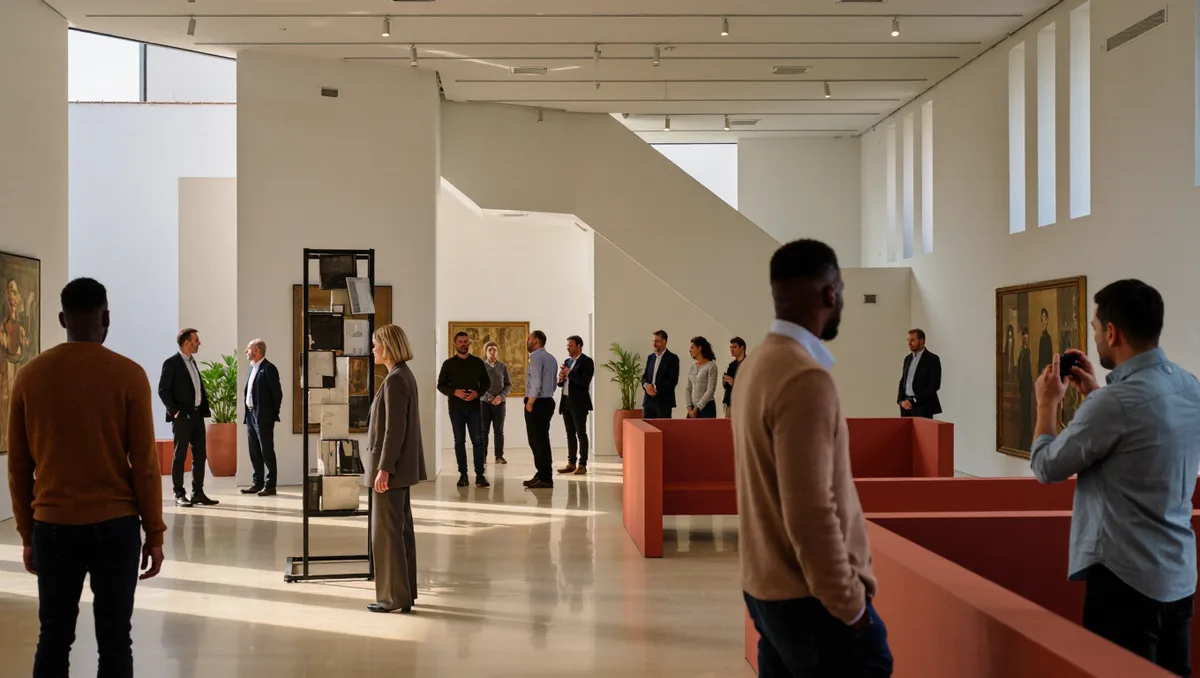
Less than you fear. The standard gallery is a bare room with a desk, an arrangement the trade inherited from the white-cube ideal of showing art without context; the ideology behind that bareness, and how it shaped the way we look and pay, is unpacked in The White Cube Explained. In practice, the ritual is simple: you enter, you look, and the staff may offer a price list or a card. Take both. Reading the checklist is how you learn what things cost, and nobody will pressure you for taking one.
If a wall text reads like it was fed through a jargon machine — and some do — ignore it and look at the work first. The press-release genre has its own inflated vocabulary, and learning to skim it is a skill in itself; How to Read a Gallery Press Release Like an Editor walks through the tells. A useful line at the desk is simply: "Can you tell me about this artist?" Gallerists talk willingly about their roster. That is the whole business.
Photography is generally fine in commercial galleries unless posted otherwise, though it is polite to ask. Touch nothing, obviously, and keep bags off the walls — the staff will notice, kindly.
Do you need to understand prices before you go?
No, but a little context makes the price list less mysterious. On the primary market — new work sold for the first time — the gallery and the artist set the price together, and the number travels from the studio to the gallery to the fair in fairly predictable ways, as traced in Who Sets Prices on the Primary Art Market?. Emerging artists' prices are set partly by materials costs and studio rent, which is why a modest painting can carry a real number: the artist is a worker with costs, not a hobbyist. Readers following this should also see Who Sets Prices on the Primary Art Market? How a Number Travels From Studio to Gallery to Fair.
What this means for a first-timer is straightforward. You are not expected to know whether a price is right. You are allowed to ask how long the artist has been with the gallery, whether the work has been exhibited before, and what else is available. Those questions are normal, and they cost the gallery nothing to answer.
Our analysis: why Boston's scale is the beginner's advantage
The honest reading of Boston's scene is that its smallness is its best feature. A compact circuit means the same gallerists see you more than once, that the distance between the blue-chip townhouse show and the coop experiment is a fifteen-minute walk, and that a newcomer can build a sense of the whole in a season rather than a decade. In a larger market, a first-timer can hide; in Boston, you will be remembered, which is how collecting habits — and friendships with dealers — actually form.
What the evidence here establishes is the geography and the etiquette. What remains uncertain, on any given weekend, is which shows are up; that is the one thing no guide can settle for you, and checking before you go is the only reliable move. The neighborhood map is durable. The exhibitions are not.