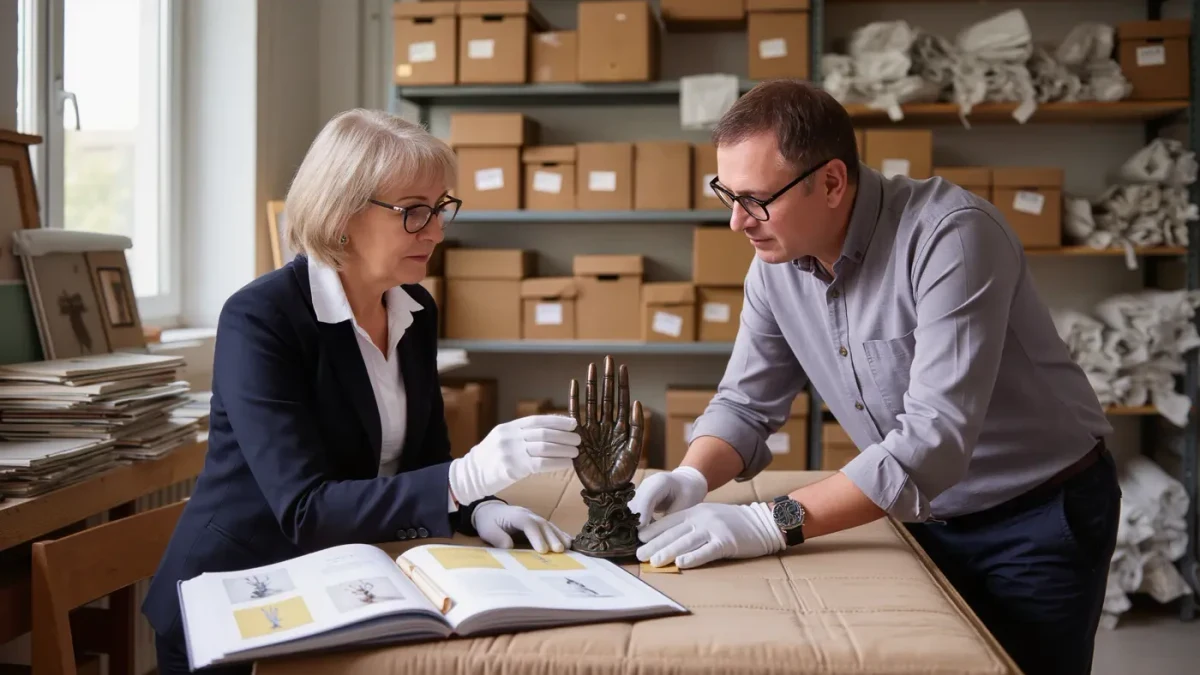
What should a condition report tell you before you buy a work of art? Everything that is wrong with the object and everything that has ever been done to it: tears and their repairs, craquelure patterns, overpainting, relining, previous restorations, fading, corrosion, structural issues with supports and frames. At auction the condition report is a legal pillar of the transaction — the houses sell largely as-is, with catalogues disclaiming the rest — and at galleries it is a conversation the buyer should insist on having in writing. Its market weight is hard to overstate: condition problems that are undisclosed destroy trust and price; the same problems, documented and competently treated, are simply part of the object's biography.
What Goes Into a Real Condition Report
A professional report is organized by component, not by severity. For a painting: the support (canvas, panel, stretchers), the ground, the paint layers, the varnish, the frame. For works on paper: the sheet itself — foxing, acidity, toning, tears, creasing — plus media stability, hinging and matting. For sculpture and installations: structural integrity, welds, patina, replaceable versus integral components. Each finding is located precisely and photographed under normal and raking light, and — the crucial section — distinguished between condition issues (current state) and conservation history (past interventions).
The vocabulary is standardized enough to learn quickly. Inpainting means lost paint has been filled and retouched; overpaint is the cardinal sin, original paint covered by later hand. Relined means the canvas has been glued to a new support, routine for old masters and viewed with increasing suspicion for modern works, where a heavy relining can flatten impasto that collectors pay premiums for. Laid down, on works on paper, means the sheet is mounted to a support — a durability measure that lowers value for many collectors.
Condition and Price: The Multiplier Effect
Condition does not subtract arithmetically; it multiplies. Two otherwise identical impressions of the same print, one pristine and one foxed and trimmed, can differ by half in price or more. The reason is that condition determines which collectors can ever consider the work: top-condition pieces go to the top of the market's waiting lists, while compromised examples circulate among buyers for whom price compensates for flaws. For museum-bound work, condition is close to destiny — acquisitions committees weigh treatment costs and future stability, and a work needing extensive intervention carries a discount that compounds at each sale.
| Condition finding | Value impact | Notes |
|---|---|---|
| Minor stabilized craquelure | Neutral to slight | Age-appropriate for older work |
| Small localized inpainting | Modest negative | Acceptable if disclosed and well executed |
| Significant overpaint | Severe | Covers original material; specialists discount heavily |
| Relining of a modern canvas | Often substantial | Can flatten impasto and alter surface character |
| Foxing, tanning on paper | Moderate | Treatable, but sheet is altered |
| Tear with visible repair | Substantial | Structural history deters top buyers |
| Untreated active damage | Negotiating lever | Risk shifts to buyer post-purchase |
Restoration: When It Helps and When It Hurts
The professional consensus — enshrined in the codes of bodies like the American Institute for Conservation — is that conservation should be minimal, documented and reversible. A well-documented treatment by a named conservator, using stable materials, dated and photographed, generally preserves or even reassures value: it tells the next owner the problems were handled professionally and are disclosed. Undocumented or aggressive restoration does the opposite, because the next specialist's examination discovers it, and the discovery converts a condition problem into an honesty problem. The market's memory for botched treatments is long — controversial cleanings of major museum paintings have echoed through the literature for decades — and for any work heading toward significant value, treatment history becomes part of its scholarly record.
A Practical Pre-Purchase Checklist
- Request the condition report in writing before the fall of the hammer or the signed invoice — verbal assurances are worth the paper they are spoken on.
- Examine under raking light — a low-angle lamp reveals inpainting, canvas deformations and prior repairs invisible in frontal gallery lighting.
- Ask for the conservation history: who treated it, when, for what, with what materials, and whether a treatment report exists.
- Use ultraviolet light where offered — recent inpainting and new varnish fluoresce differently than aged original surfaces.
- For contemporary work, ask the artist's studio via the dealer about intended materials, maintenance expectations and what counts as damage versus intended surface.
- Price the post-purchase care: framing to conservation standard, climate considerations, and insurance that covers treatment as well as loss.
Materials, Media and the Passing of Time
Condition risk is medium-specific, and buyers should calibrate expectations accordingly. Oil on canvas is the market's most durable technology — centuries-old panels trade briskly — but it carries its own failure modes: cleaning controversies, relining damage, flaking that resumes in dry climates. Works on paper are the vulnerable class: light exposure is cumulative and irreversible, so toning and fading are questions of display history as much as treatment, and the acid content of old mats and backings quietly browning edges is near-universal. Photography and editions introduce the polymer-and-pigment questions of the past fifty years, where some processes are famously fugitive and the difference between a stable and an unstable print can be an edition-mates matter. Contemporary practice ups the ante deliberately: chocolate, latex, soap, unfixed pigment, live components — materials chosen for mortality, where the studio's maintenance instructions are the only thing standing between the work and its own chemistry. The buyer's discipline is to price the object's future, not its present: what maintenance will it demand, what will it look like in twenty years, and who will still know how to treat it. A condition report describes a moment; materials knowledge describes a trajectory.
Who Writes the Report, and Whose Word to Take
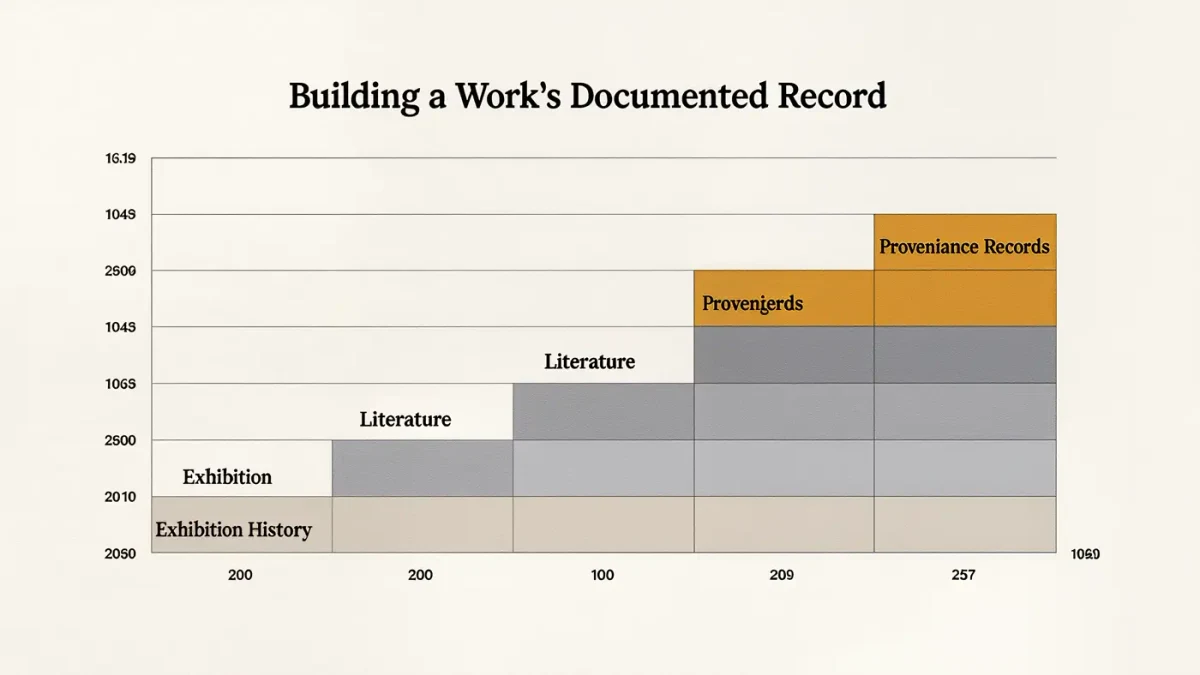
Authorship matters. An in-house auction condition report is written by the department's specialists — competent, standardized, and produced by the party selling. A gallery's verbal assurance is worth exactly its paper. The independent conservator's pre-purchase examination is the gold standard: unconflicted, trained in exactly this diagnostic work, and able to produce imaging (ultraviolet, raking, sometimes X-ray or infrared for paintings) that reveals what frontal viewing cannot. For six-figure purchases the independent examination fee is noise against the discount an undisclosed problem forces at resale; for lesser amounts, the minimum viable diligence is the written report plus your own slow inspection under raking light. The final habit worth forming is archival: keep every condition document you receive. Condition history is becoming what provenance always was — the record that lets the next buyer say yes quickly, which is, in the end, what liquidity means for an object that cannot be priced without being believed.
FAQ
Do auction houses guarantee condition?
No. Catalogues carry explicit condition disclaimers, and the accompanying condition reports are disclosures rather than warranties. Authenticity has limited contractual recourse; condition has essentially none after the sale, which makes the preview window and written report the buyer's real protection.
Can a restored painting still be valuable?
Very much so — most old masters have been restored at some point. What preserves value is quality and documentation: minimal, reversible treatment by a named conservator, fully disclosed. Undisclosed or heavy-handed intervention is what destroys price.
What is the difference between inpainting and overpaint?
Inpainting fills only areas of lost paint, leaving original material untouched. Overpaint covers original paint — historically common in careless restorations — and specialists discount it heavily because the work is no longer fully the artist's hand.
Should I commission an independent condition check before buying?
For anything above a comfort threshold, yes. An independent conservator's pre-purchase examination costs a fraction of the discount you would take reselling an undisclosed problem, and the resulting report strengthens both the negotiation and the work's future documentation.
Does condition matter less for contemporary art?
It matters differently. Contemporary materials may be intentionally fragile or unstable, so the key document shifts from restoration history to the artist's own installation and maintenance instructions — what studios issue to keep the work exhibitable and authentic.