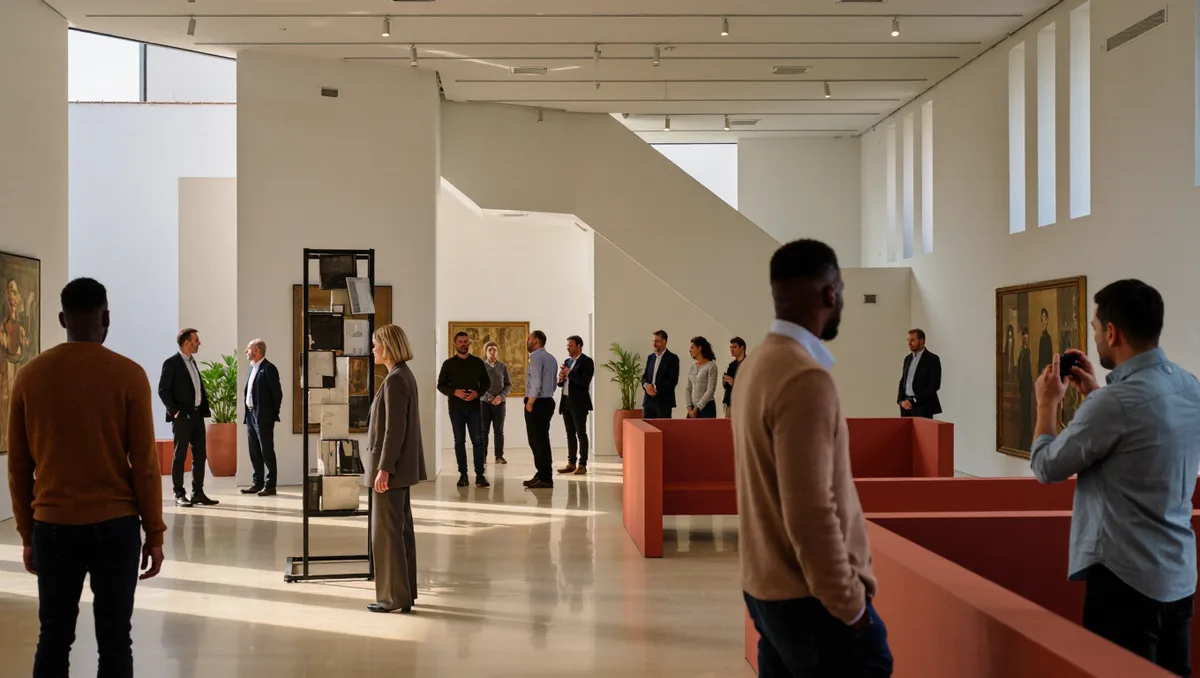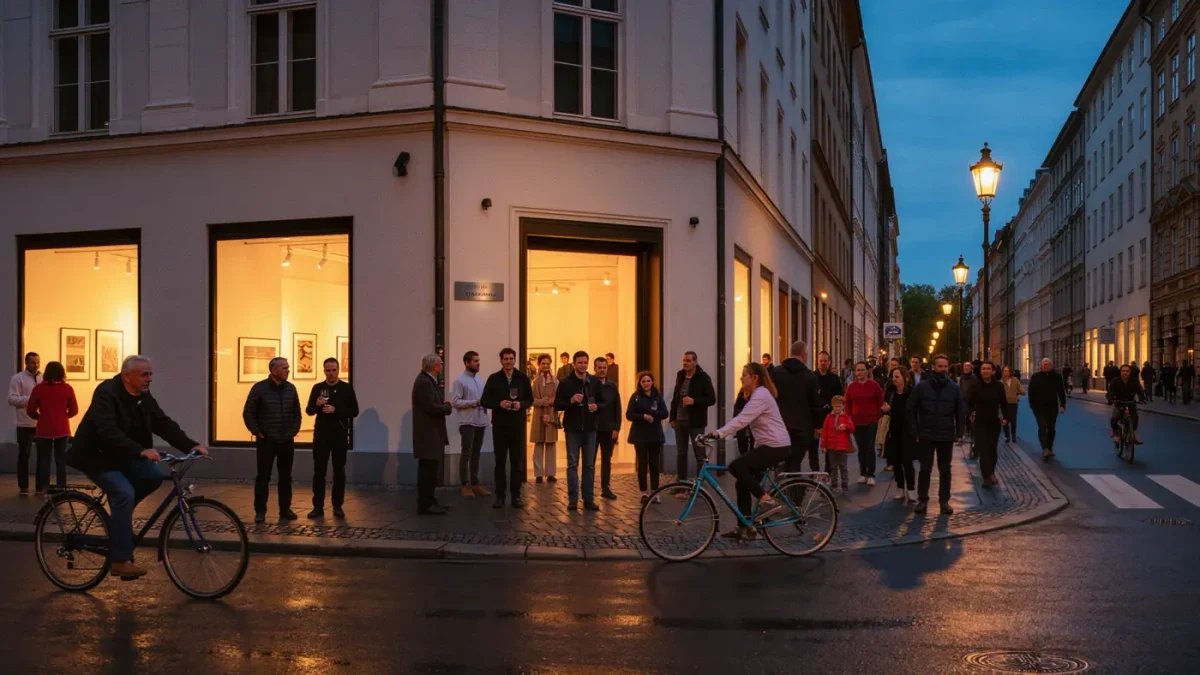
What is a Gallery Weekend? A city-wide event in which local galleries synchronize their best exhibitions into a single long weekend — coordinated openings, extended hours, printed maps, shuttle routes and a curated program of dinners and artist talks. The format's flagship is Berlin's Gallery Weekend, founded in 2004 by a group of the city's dealers, which now draws thousands of international collectors to a city with no fair of its own. The idea has since been replicated from London to Mexico City to Beijing: aggregate the galleries' individual audiences into one moment, and the moment becomes a destination.
Where Did the Format Come From?
The Berlin origin is instructive because it was defensive. Post-reunification Berlin had the artists, the studios and the cheap space, but not the collectors — they lived in Cologne, Zurich, London and New York, cities with fairs that gave them a reason to travel. Berlin's dealers, facing the permanent problem that serious buyers visited twice a year at best, coordinated instead of competing: everyone opens on the same April weekend, everyone brings their strongest program, and the aggregated gravity pulls the international audience in. Twenty years on, the event spans dozens of galleries across the city and is fixed on the art world's calendar alongside the fairs — a fair, effectively, without the booth fees.
The replication followed the logic rather than the city. London's Contemporary Art Evening-like gallery weekends, Mexico City's, Los Angeles's, Seoul's and many others all address the same structural complaint: in the fair era, galleries' home programs get the leftovers of everyone's attention. A weekend re-monopolizes it.
What Actually Happens During a Gallery Weekend?
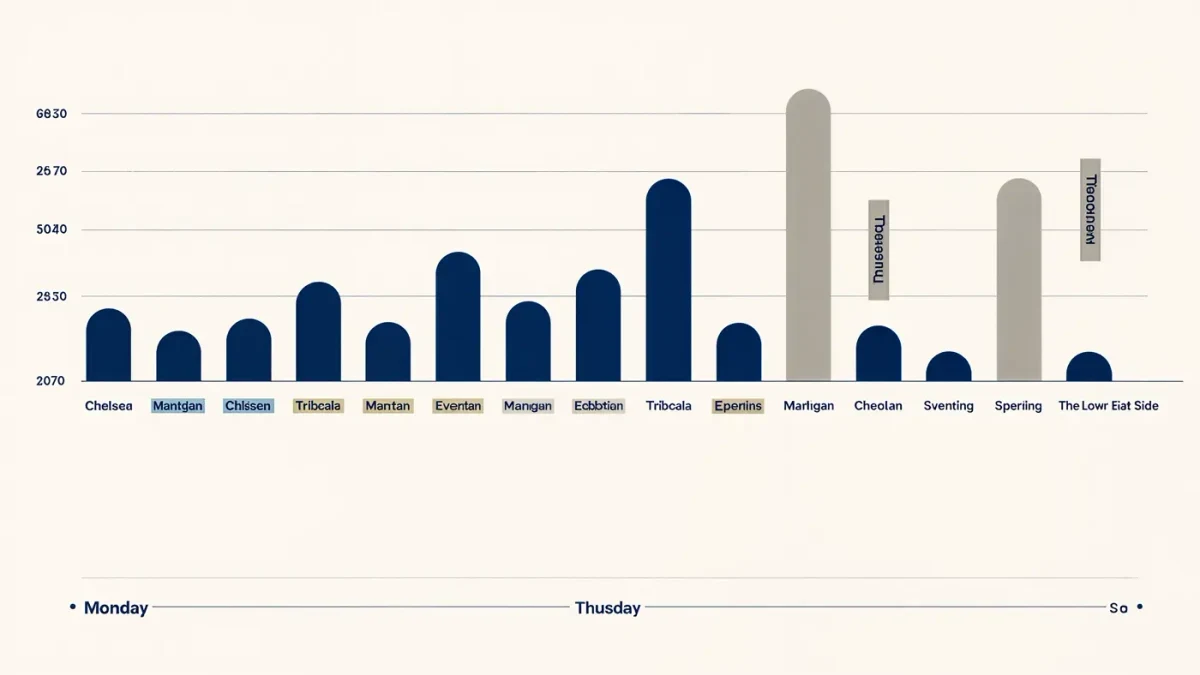
Four dense days, choreographed. Thursday and Friday belong to the VIP program — private visits, collection tours, studio appointments and the dinners where the actual social market operates. Saturday opens to the public, and the streets outside serious galleries acquire queues. The standard apparatus:
- Coordinated openings timed so visitors can route between neighborhoods without clashes.
- Night openings on one designated evening, converting a gallery district into a street festival with better wine.
- A VIP program of dinners and receptions that gives out-of-town collectors a reason to book flights.
- Talks, performances and premieres — new bodies of work are routinely held back from spring fairs to debut during the weekend.
For collectors, the value is density: forty shows, three days, one hotel booking. For galleries, it is the one week a year their actual exhibition program — not a booth — is the market's center of attention.
The weekend also recalibrates the artist side of the ledger. Knowing that thousands of visitors — and the critics — will pass through in four days, galleries save ambitious installations and debut bodies of work for the weekend rather than letting them evaporate in a normal March slot. Artists, in turn, get the one exhibition a year their entire international audience actually attends, which is why the weekend program reads like a city's curatorial showcase rather than its retail calendar.
What Is the Economics for Galleries?
A fraction of fair costs with a fraction of fair reach, which different galleries rate differently. Participation is cheap — no booth fee, no shipping to another country, no hotel block — because the gallery's own space is the venue. The costs that remain are real but domestic: a stronger exhibition, catering, staff overtime and the weekends' growing expectation of programmed events. Sales concentrate meaningfully in the weekend's days (organizers of the Berlin event have reported that galleries transact a disproportionate share of their spring sales during it), and the deferred effect matters more: new collectors met at dinners, relationships started, museum groups routed through.
The strategic function is subtler. A gallery weekend is the city's argument that its galleries are destinations rather than fair-participants — an argument addressed simultaneously to collectors (come here) and to artists (stay here). Cities with weekends but no fair use them to keep local scenes viable; cities with both use the weekend to deepen what the fair only samples.
Gallery Weekend vs. Art Fair: What's the Difference?
| Gallery Weekend | Art fair | |
|---|---|---|
| Venue | Galleries' own spaces across a city | Single fair hall, booths |
| Cost to gallery | Modest: program, catering, events | Booth fee plus build, shipping, travel |
| Inventory | Full exhibitions, new productions | Booth-selected works |
| Experience | City-wide, multi-day, social | Compressed, competitive, transactional |
| Reach | Regional plus traveling collectors | Global collector pool |
The two formats now cooperate: Berlin's weekend sits deliberately in the spring corridor near other European events, and many collectors route a fair trip through a weekend either side of it. The weekend is the fair's slower, cheaper, better-dressed cousin.
Timing is the quiet strategy. Berlin anchors late April; other cities slot their weekends adjacent to fairs or auctions so that traveling collectors can add two days to an existing trip rather than make a new one. The calendar thus fills the gaps between fairs — which is precisely the habitat the weekend evolved to occupy.
Why Do Cities Invest in Gallery Weekends?
Because cultural tourism has a multiplier and galleries are cheap infrastructure for it. City marketing bodies and tourism boards increasingly co-fund weekends (accommodation partnerships, public programming, embassies' cultural arms hosting receptions) in exchange for a weekend when high-spending visitors fill hotels in a neighborhood's off-season. The galleries get marketing they could never buy individually; the city gets a branded art event without building a museum. Not every replica thrives — the format depends on a critical mass of serious galleries within visiting distance, and weaker editions drift into local prestige theater with no international audience. The successful ones share Berlin's founding condition: enough good galleries, sufficiently desperate, sufficiently coordinated.
Local politics plays its part too. Weekends give gallery associations leverage with landlords and city hall — a documented annual economic event is harder to evict than a quiet showroom — and several editions have anchored neighborhood cultural strategies that kept districts from tipping fully into luxury retail. Cheap space made the galleries; the weekend, in a small way, defends the cheap space.
FAQ
What is Gallery Weekend Berlin?
A coordinated annual event founded in 2004 in which Berlin's galleries open major exhibitions simultaneously over an April weekend, with a VIP program of dinners and visits that draws international collectors. It is the flagship of a format since replicated in cities worldwide.
Is a Gallery Weekend open to the public?
Yes — unlike a fair's VIP preview tiers, the exhibitions themselves are free and open, with opening nights and extended hours. The VIP layer exists (dinners, collections, studios), but the core program is public by design; that openness is part of the city's tourism pitch.
How is a Gallery Weekend different from an art fair?
No booths, no booth fees, no single hall: shows happen in galleries' own spaces across the city, so galleries show full exhibitions rather than booth edits at a fraction of fair cost. Fairs still deliver denser international reach, which is why most galleries do both.
Do galleries actually sell during Gallery Weekends?
Meaningfully — organizers have reported that Berlin galleries concentrate a substantial share of spring sales in the weekend, plus the deferred sales from relationships formed there. The economics work precisely because the costs are domestic rather than international.
Which cities have Gallery Weekends?
Berlin is the original and largest; the format has been adapted in London, Los Angeles, Mexico City, Seoul, Beijing, Oslo and dozens more. Quality varies with the local gallery base — the weekend only works where enough serious galleries exist to aggregate.