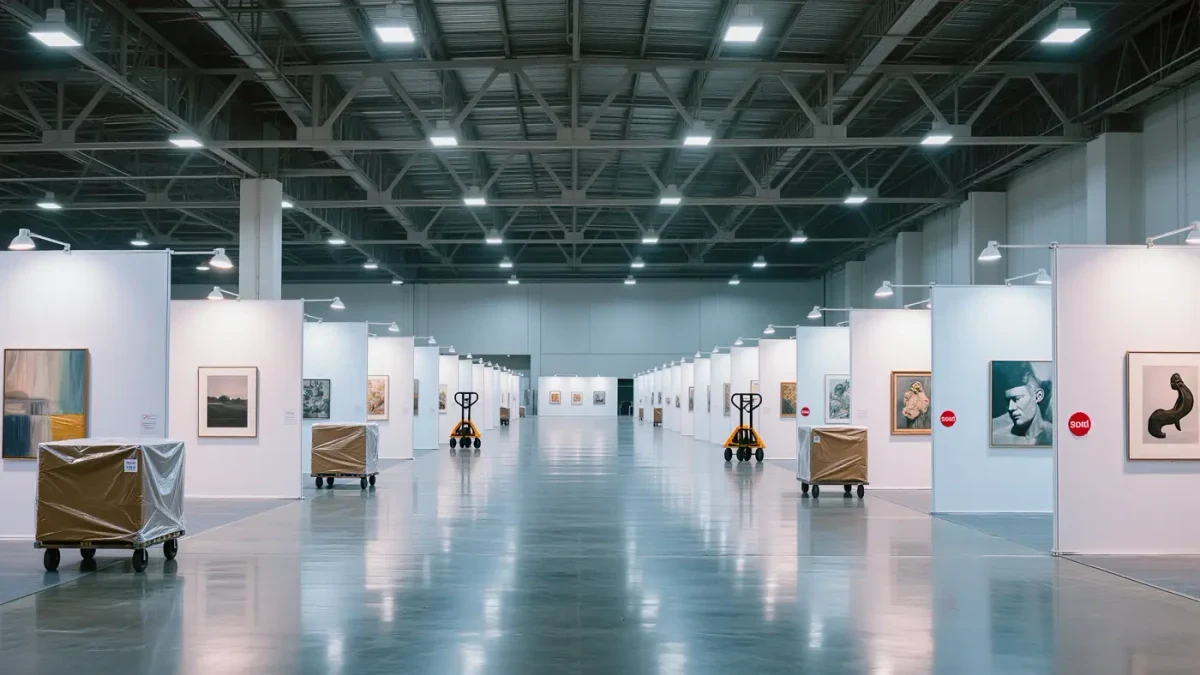
Why is the best art at fairs already sold when the public gets in? Because art fairs open in tiers: First Choice and top-tier VIP cardholders walk the aisles a full day or two before general admission, and the market's most active collectors — advised, financed and pre-briefed by the galleries — transact in those hours. Dealer folklore holds that a substantial share of a fair's business is written during preview days, before a single day ticket is scanned. The public fair is, in a real sense, the aftermath.
How Did the VIP Preview System Develop?
Fairs have always courted serious buyers ahead of the crowd — the logic is as old as dealers' private viewings — but the modern tiered apparatus matured with the fair boom of the 2000s, when Art Basel's unlimited expansion and the proliferation of international events turned collector calendars scarce. If your fair is one of six a collector attends per year, your competitive product is not the art alone; it is the guarantee of seeing it first. Fairs responded with graded access: press and museum professionals, then VIP tiers, then preview days stacked like sediment — a structure now standard from Basel to Miami Beach to Frieze's various cities.
The pandemic-era experiments with online viewing rooms, which arrived with their own timed VIP access, confirmed the pattern rather than disrupting it: digital replicas of the same hierarchy, down to the early-access email.
What Are the Actual Tiers of Access?
The nomenclature varies by fair, but the ladder is recognizable everywhere:
- Staff, exhibitors and install: the days before anyone — where early-bird dealing between booths genuinely happens.
- Press and museum professionals: morning previews before the VIP afternoon, cameras before checkbooks.
- Top-tier VIP (First Choice at Art Basel and equivalents): the first real sales day, invitation-only, strictly rationed by the fair's client-relations team.
- Standard VIP: the following preview day; still pre-public, but the First Choice holders have already circled what they want.
- Public days: the weekend — admission-priced enthusiasm, thinner inventory, and the stands' actual profit may already be booked.
Card allocation is the fair's quiet power. The guest list is compiled from exhibitor nominations and the fair's own database of past buying behavior, and galleries guard their nomination slots like inventory — a First Choice card handed to the wrong client is a placement opportunity wasted.
Why Do Sales Concentrate in Preview Hours?
Scarcity is manufactured in advance. Galleries send preview images and price lists to top clients weeks before the fair, so the serious buyer arrives with a shortlist and a number already in mind; the booth conversation is confirmation, not discovery. The preview room itself compresses competition — a collector told that two people have asked about the same painting experiences exactly the urgency the format is designed to produce. And the tiering is self-reinforcing: because the best inventory is reserved for early days, serious buying must happen early, which makes early access the thing worth having, which makes the client behavior that earns a top card the market's true status ladder.
For galleries, the preview is also a screening mechanism. The first-day crowd is small, known and pre-vetted — the allocation of works to museums, long-term holders and 'good homes' happens while the room is quiet, before flip-adjacent enthusiasm arrives with the weekend.
For museums, the preview is a working day with better optics: curators see everything in one building, compare across booths and open acquisition conversations while trustees are still in a buying mood. Several fairs explicitly court this with museum-acquisition funds and curator programs — institutional validation procured at fair speed, and another reason the preview crowd matters beyond its wallets.
What Is on the Actual Menu at a VIP Preview?
Access, mostly, dressed as hospitality. The classic apparatus: exclusive collector lounges with catering the public floor does not see, curatorial walkthroughs, dinners hosted by galleries and museums around the fair's city, and the intangible but decisive service of the fair's staff knowing your name, your collection and your spending history. The evening events matter commercially — a large amount of fair business concludes over dinner after the preview day formally ends, which is why galleries budget for hospitality as seriously as for booth construction. None of this appears in any sales report, and all of it is the fair.
The hierarchy even has a diplomacy. Galleries routinely place a 'held' marker on a work to signal seriousness to second-day visitors, and collectors have learned to read the dot wall the way traders read an order book — which reds are firm, which are soft, whose hold expires at six. A booth's preview day is less a shop than a short, polite auction conducted entirely in body language.
Is the Tiered System Controversial?
Quietly, yes — on three fronts. Critics of the fair model note that preview-tiering formalizes a market where access equals returns: early buyers at primary prices capture the appreciation that later entrants pay for. Galleries grumble that the arms race of dinners and lounges inflates their costs while the fair captures the gate. And the tier system itself breeds status anxiety among collectors that the fairs have every incentive not to resolve, since the desire for a better card is the desire that brings people back. The only genuine challenge to date came from without: the 2020–21 online viewing-room season reproduced the tiers so faithfully, and so unsatisfyingly, that the in-person hierarchy returned stronger than before.
Viewing rooms formalized the pre-fair rhythm. What began as pandemic improvisation became standard practice: weeks of PDFs, Zoom studio visits and 'expression of interest' lists that convert the preview itself into a confirmation ceremony. The industry's consensus is that this front-loading rewards the largest galleries most — they have the client databases to run it — which is one more way the fair economy concentrates at the top.
FAQ
What is a VIP preview at an art fair?
Invitation-only opening days before public admission, reserved for the fair's highest-tier guests — at Art Basel, the top level is branded First Choice. Galleries concentrate their best inventory and top-client outreach in these hours, and a large share of fair sales is widely understood to be written before the public enters.
How do you get a VIP card for an art fair?
You cannot buy the top tiers. Cards are allocated through exhibiting galleries' nominations and the fair's own database of past collectors, with museums and press handling separate accreditation. Spending history and relationships are the currency — which is the point.
Do galleries really sell out before the fair opens to the public?
The strongest booths routinely place their best works during preview days, and pre-fair reserve lists mean some sales are agreed before install finishes. Public-day visitors see the residue — though residue at a major fair is still a better selection than most galleries' home cities offer.
What is First Choice at Art Basel?
The fair's top invitation tier, admitting collectors to the earliest preview day ahead of standard VIP and public opening. Its scarcity is deliberate marketing: the name states the commercial proposition exactly.
Are VIP previews open to new collectors?
Entry is relationship-based rather than purchase-based, but new collectors do get in — typically through a gallery they buy from, which nominates clients for access. The practical route is to build one serious gallery relationship rather than to chase cards directly.