A performance art review is a published judgment of a work that exists only while it runs. The critic weighs time, space, the body, the artist's presence, and the tie to the audience. Those are the five basic elements that reference surveys assign to the genre. Nothing hangs on a wall afterward.
The stakes are structural. The standard account describes the ideal as "an ephemeral and authentic experience" in "an event that could not be repeated, captured or purchased." Once the lights rise, only records remain: photographs, video, and reviews. The evening sale has no lot to consign. The review is the closest thing to one. We covered a connected angle in Artist Retrospective Review — The Retrospective Verdict: Do Career Surveys Hold Up?.
What Is a Performance Art Review Actually Judging?
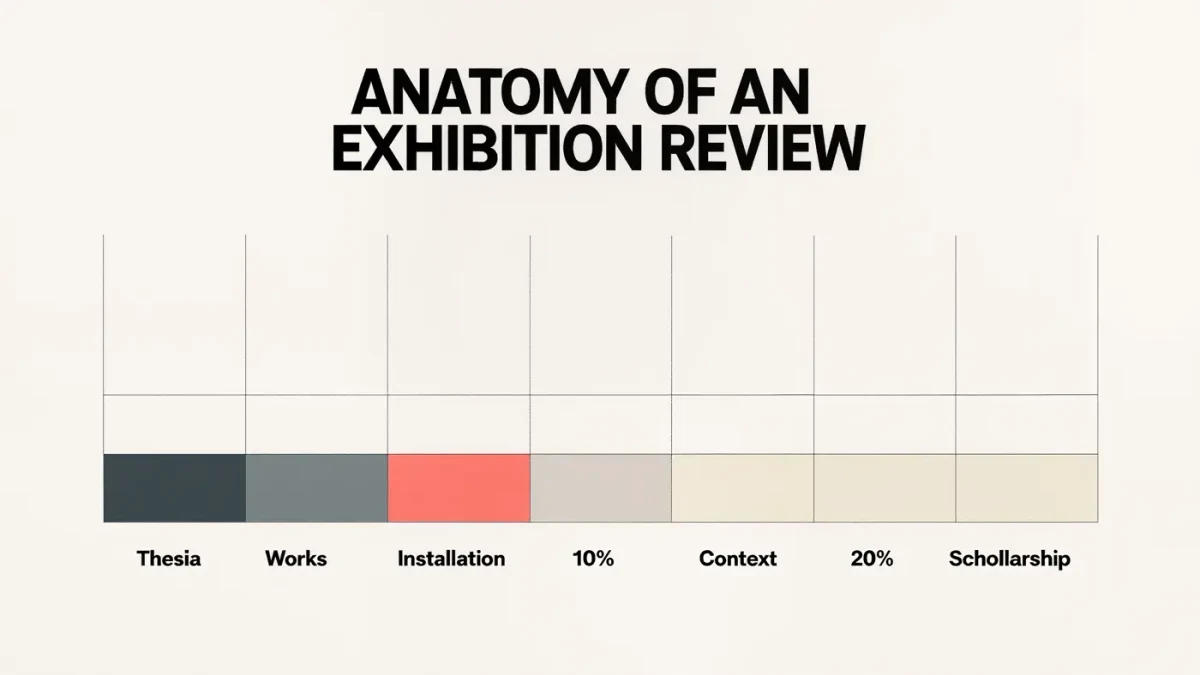
The checklist is short. Reference accounts list five basic elements: time, space, body, presence of the artist, and the relation between the artist and the public. Performance art grew into its own genre of live presentation, with roots in futurist productions and cabarets from the 1910s.
A useful review therefore reads like a report from a finite event: where it happened, how long it ran, who stood in the room. Verifiable detail beats mood. "The gallery felt charged" tells a reader nothing in ten years. "The piece ran 90 minutes and drew a full house" still counts as evidence.
Why Can the Review Outlast the Work Itself?
Ephemerality is the founding condition. Chris Burden's Shoot (1971), in which an assistant shot him in the arm from a five-meter distance, survives through accounts and photographs. The moment itself cannot be reframed or resold. So curators, collectors, and later buyers cite the written record instead.
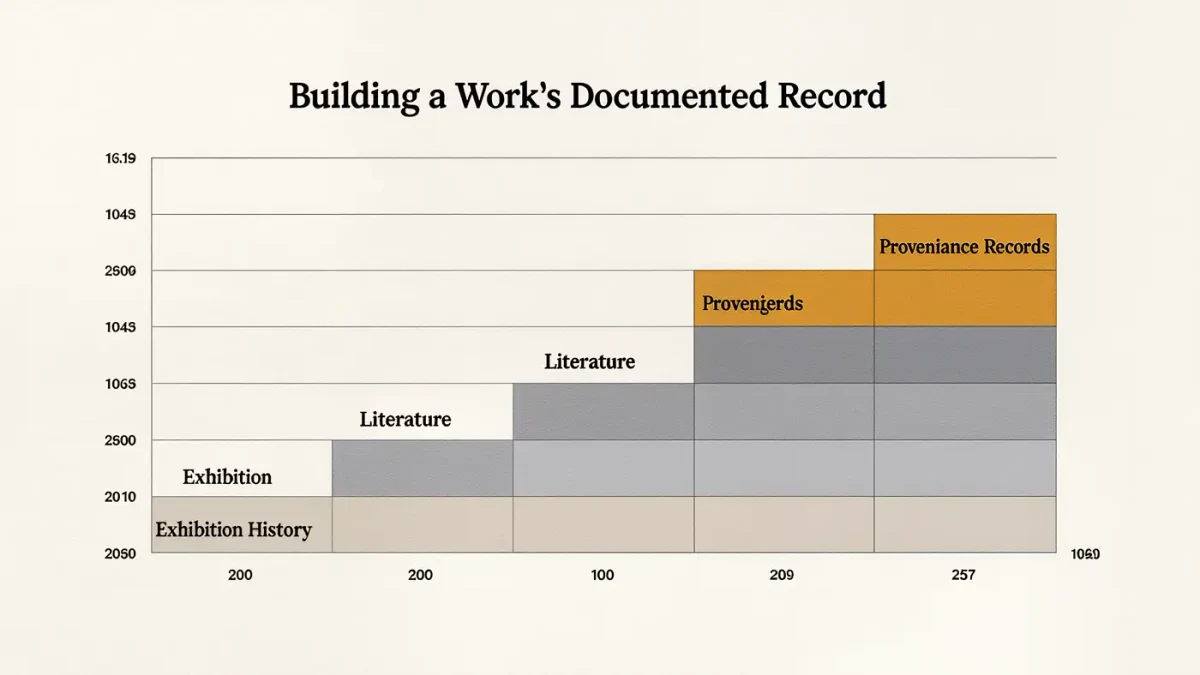
This is where the review gains its market weight. Documentation, not the event, is what trades, licenses, and enters museum archives. A critic who logs dates, durations, and crowd behavior is building provenance for an object that has no body. Few beats in journalism carry that much leverage over value. For related coverage, see Museum Surveys and Retrospectives: How the Big Shows Are Built and What They Do to an Artist's Market.
How Do Critics Cover Endurance Work?
Duration is the hardest variable. At the Museum of Modern Art's 2010 retrospective, Marina Abramović performed The Artist Is Present, a 736-hour and 30-minute static, silent piece. She sat immobile in the museum's atrium while spectators took turns sitting opposite her.
No critic saw all 736 hours. Honest reviews say so. They sample sessions, watch the door, and state exactly which stretches the critic attended. Burden's Bed Piece (1972) ran twenty-two days. The reviewer who hides the arithmetic gets caught by it.
How Did Museums and the Market Change the Form?
The term went wide in the 1970s; art critic John Perreault credits the artist Marjorie Strider with coining it in 1969. Museums arrived later. Reference accounts note that galleries and museums began treating live, photographed, or documented work as a discipline in the 1990s. Full institutionalization followed in the next decade at the Tate Modern, MoMA, and the Pompidou Centre.
Re-enactment then closed the loop. Abramović's Seven Easy Pieces (2005) at the Solomon R. Guggenheim Museum remounted earlier works, including Gina Pane's The Conditioning (1973), with its bed frame and grid of lit candles. A reperformance is a dated, ticketed object. It can be reviewed like any debut.
Conclusion: What Makes a Performance Review Hold Up?
The durable reviews lock the event to checkable facts and admit their limits. The working method reads like this.
- Name the five elements and describe how each one behaved.
- Log dates and total duration in hours, not adjectives.
- Attribute every claim about intent to the artist or the curator.
- State which sessions the critic attended and which records filled the gaps.
Paintings get a second life at auction. Performance gets a file. The critics who write those files are, in effect, the appraisers of record. The trade does not pay them, and it cannot replace them.