Who sells the art that isn't new? Secondary-market dealers do — private galleries and advisors who handle resales of any work that already has an owner, operating on consignment or outright purchase, typically at commissions of 10 to 25 percent, largely invisible until the results surface in an auction record or a museum press release. The secondary market is the larger share of global art commerce (annual Art Basel and UBS survey estimates put it well above half of total sales by value), and its dealer tier is where price discovery happens in private, at dinner-party velocity rather than hammer rhythm.
What Is a Secondary-Market Dealer?
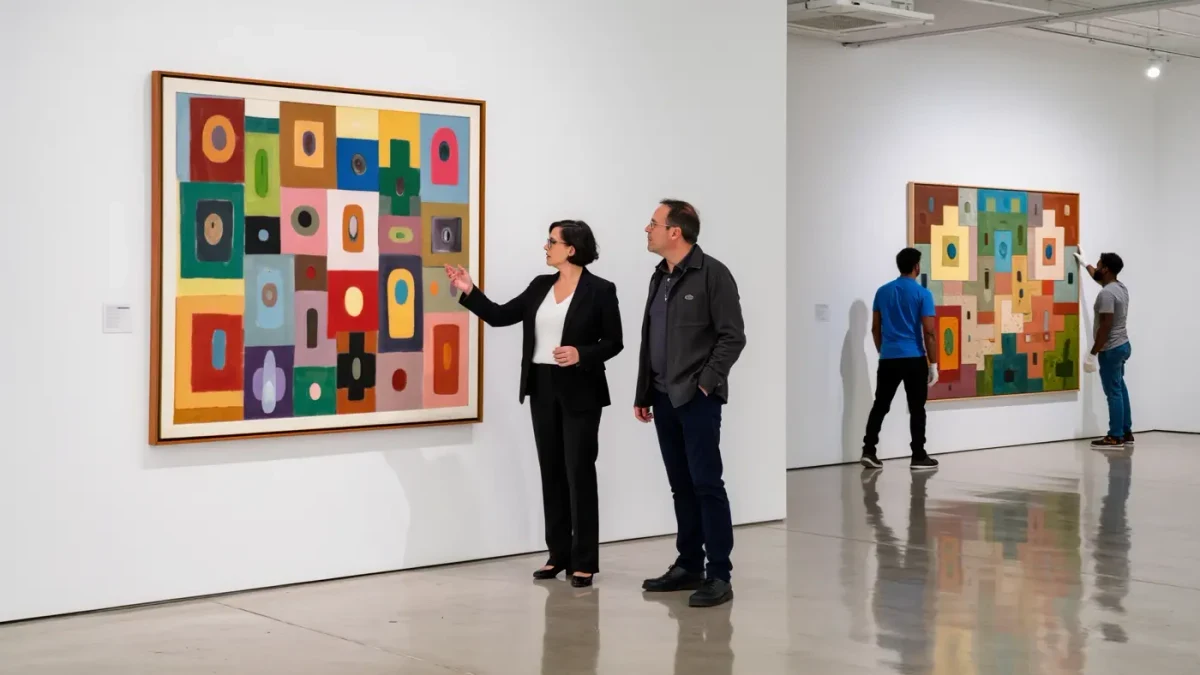
Any professional who trades in existing works rather than artists' new production: blue-chip gallery secondary departments, specialist dealers, private sellers and the advisory layer that sits between them and collectors. The inventory is by definition pre-owned — a 1968 Gerhard Richter, a 1980s Basquiat, a photograph edition from fifteen years ago — and the skill is informational. Primary dealing is a relationship business with forty people; secondary dealing is an information business with the whole market, where knowing that a museum wants to deaccession a specific canvas, and which three collectors would pay to pre-empt it, is the entire franchise.
Unlike auction houses, dealers do not publish. No estimates, no results, no bought-in lots — just a private treaty between two parties who may both prefer that nothing print. That opacity is not a defect; it is the product. Sellers who fear a public failure, buyers who fear telegraphing taste, and estates pacing supply all pay for the discretion.
How Does Consignment Work on the Secondary Market?
The mechanics mirror the primary world with sharper economics. A collector consigns a work to a dealer at an agreed asking price; the dealer shops it through the network — other dealers, advisors, the two collectors known to want the artist — and remits the proceeds minus a commission that scales inversely with value: 10 to 15 percent on a seven-figure painting is standard, 20 to 25 percent on mid-six-figure works, occasionally higher once a work needs real placement work. Alternatives to consignment: outright purchase by the dealer (clean, fast, priced to leave the dealer margin), or a floor agreement guaranteeing the seller a minimum regardless of outcome — the private-sale analogue of an auction house's irrevocable bid machinery, in which a third party commits in advance and shares upside if the work sells higher.
- Seller and dealer agree a reserve and commission structure.
- Dealer verifies provenance, condition and title, and prices against auction comparables.
- Work is quietly offered to the known universe of likely buyers.
- Negotiation — sometimes multi-dealer, each taking a slice for introducing a party.
- Sale closes with mutual confidentiality; the price may never surface publicly.
How Do Dealer Prices Relate to Auction Prices?
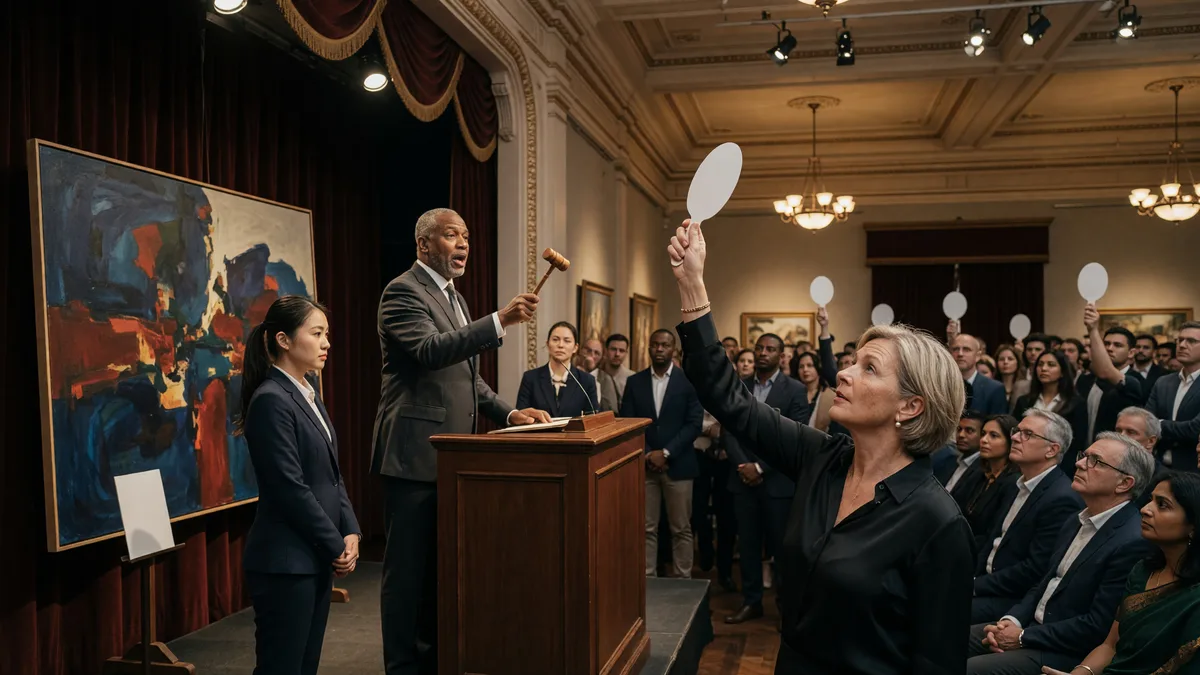
Auction results are the secondary market's reference library — dealers price privately against the last comparable hammer plus premium, adjusted for condition, provenance quality and freshness to market. But the traffic runs both ways: a strong private network lets a dealer pre-empt the auction entirely, selling a work before it reaches a catalogue, and auction houses now run their own private-sale divisions doing precisely the same thing. The competitive boundary between Sotheby's, Christie's, the mega-galleries and the private dealers has effectively dissolved into one continuous secondary marketplace with different disclosure settings.
The dealers' durable edge is placement judgment. An auction treats the work as lot 14; a dealer treats it as a chess piece — this Richter belongs with that collector because it completes a period, blocks a rival's collection or suits a museum gift the dealer is quietly assembling. That is what a negotiated commission buys, and why top-end consignments still route through individuals despite the auctioneers' guarantee machinery.
Why Do Sellers Choose Dealers Over Auction?
Five recurring reasons. Discretion: no public record, no gossip about a distressed estate. Certainty: a negotiated price with no risk of a visible bought-in failure. Speed when a private buyer is already known. Condition and provenance complexity — a work with research issues is better rehabilitated by a dealer than exposed to catalogue scrutiny. And negotiation: a reserve at auction caps upside, while a private buyer with competitive tension can be pushed past estimate. The auction's counterargument is finality and cash on a fixed calendar — which is why so much secondary volume still passes through the podium, and why the auction guarantee (and its third-party irrevocable-bid variant) was engineered to import private-market certainty into the public room.
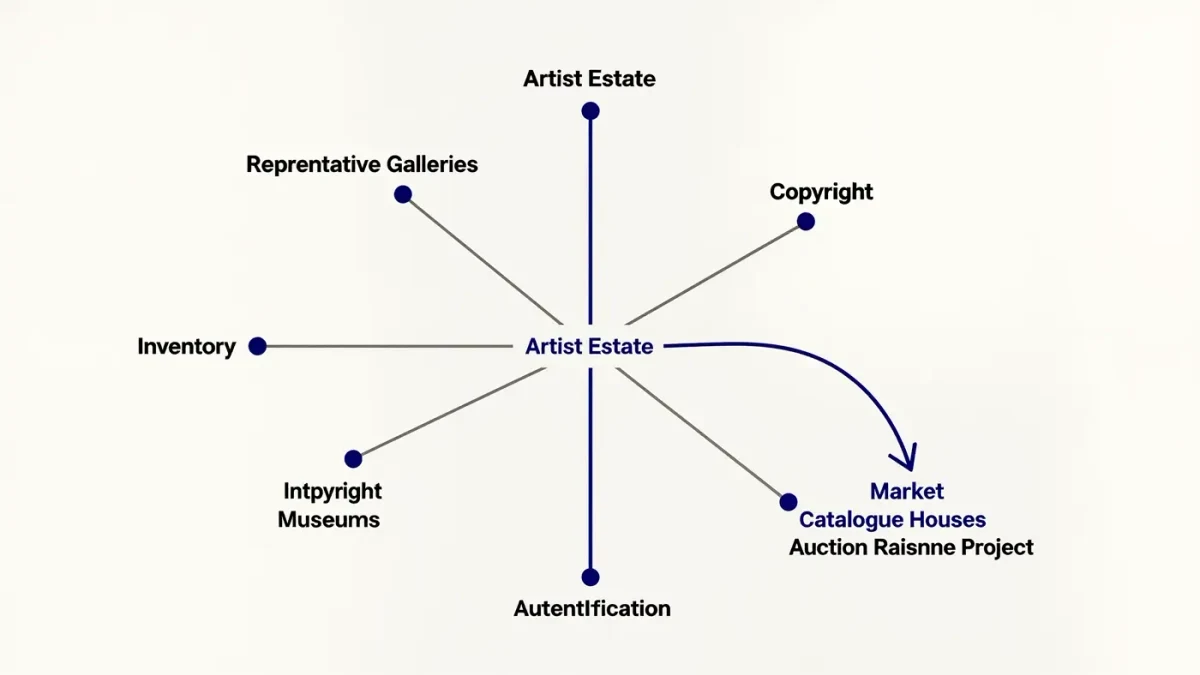
The estate layer deserves its own mention. When an artist dies, the secondary market takes over the price narrative almost immediately, and dealers become the estate's counterparts — sometimes partners, sometimes predators. Well-run estates choose a representing gallery or partner structure precisely to keep consignment flow coordinated, pricing disciplined and auction supply paced; the badly run ones discover that a rush of privately placed works at inconsistent prices does more damage than any single public flop could.
What Are the Risks in Private Sales?
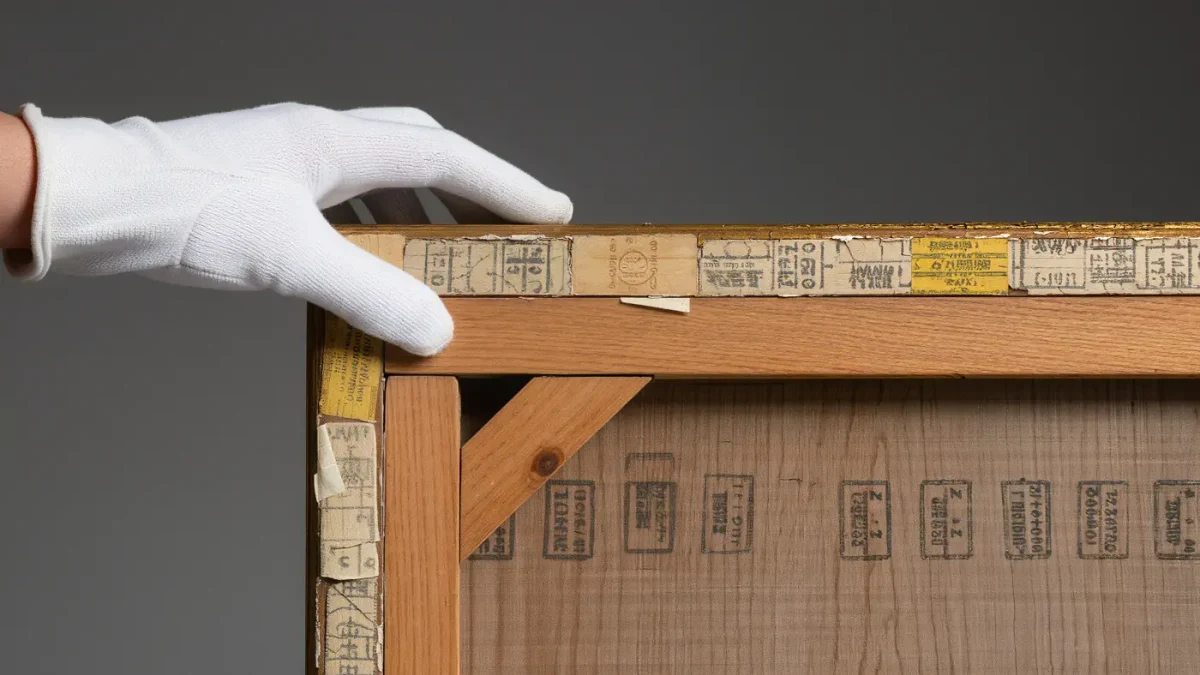
The same opacity that is the product is also the hazard. No public price record means asymmetric information: sellers routinely discover, years later, that a dealer's buyer flipped the work for multiples of the private price. Provenance diligence in private channels has historically been thinner than auction due diligence, which is why restitution claims and forgery scandals so often surface out of the dealer tier. And multi-party commission stacking — three intermediaries each taking points — can quietly consume a fifth of the sale before the seller sees money. The standard protections are contractual: resale-participation clauses, disclosure of commission chains, and independent authentication where a foundation or catalogue raisonné process exists.
Technology has nibbled at the edges — databases have made comparables ubiquitous and online-only platforms have commoditized the mid-market — but the top of the secondary market runs on information that appears in no database: who must sell before year-end, which board seat changes a collection strategy, which museum directorship will trigger gifts. That intelligence still moves by phone, and the dealers who hold it still charge accordingly.
FAQ
What is the secondary market in art?
Any resale of a work after its first sale — through auction houses, secondary-market dealers or private treaty between collectors. By value it accounts for the larger share of global art commerce, and it is where an artist's price history is either confirmed or quietly revised.
What commission do secondary-market dealers charge?
Typically 10–15 percent on high-value works and 20–25 percent lower down the scale, on consignment. Outright purchase deals embed the dealer's margin in the buy price instead — cleaner for the seller, riskier for the dealer.
What is a guarantee in a private art sale?
A commitment — from the dealer or a third party — to pay the seller a minimum price regardless of outcome, often in exchange for a share of upside above that floor. It is the private-market counterpart of the auction house's irrevocable bid arrangements.
Why sell privately instead of at auction?
Discretion, certainty and control: no public failure risk if the work doesn't sell, no record of a distress sale, and room to negotiate past what an estimate would have telegraphed. Auctions answer with fixed calendars, cash and public price-setting power.
Are private art sales regulated?
Lightly. Anti-money-laundering rules now cover art dealers in the U.S. and U.K. at applicable thresholds, but there is no general disclosure regime for private prices or commissions — buyer diligence, contractual protections and the dealer's reputation remain the real regulatory system.